


Aokai manufactures custom high temperature filter bags for industrial baghouses operating under demanding thermal, chemical and dust conditions. Available media include PPS, PTFE, P84, aramid, fiberglass and custom fiber blends.
Send us your operating temperature, gas composition, bag dimensions and quantity. Our engineers will recommend the appropriate filter media, surface treatment and bag construction.
What Are High-Temperature Filter Bags?
High temperature filter bags are industrial dust collector bags designed for gas temperatures above the practical operating range of standard polyester media, which is normally around 130–135°C. Depending on the fiber and operating environment, high-temperature media may operate continuously from about 160°C to 260°C.
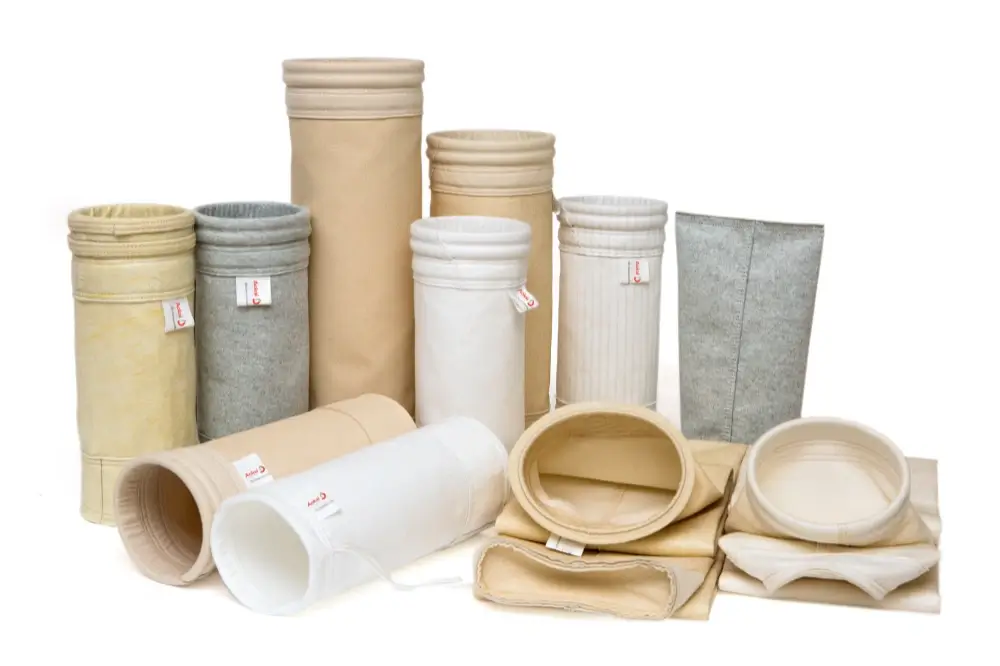
How to Select High Temperature Filter Bags
The right high temperature filter bag depends on continuous and peak temperature, gas chemistry, moisture, oxygen level, dust abrasiveness and cleaning method. PPS is commonly selected for moist, sulfur-containing flue gas. Aramid works well in dry, abrasive heat. PTFE provides the strongest chemical resistance, while P84 and fiberglass are used for demanding high-temperature filtration.

Nomex Filter Bags
Continuous:204°C (399°F)
Peak Max:240°C (464°F)
Cement kilns, hot mix asphalt manufacturing, metallurgical dust collector, and chemical production furnaces.

PTFE Filter Bag
Continuous:240°C (464°F)
Peak Max:260°C (500F)
Chemical incineration plants, waste-to-energy facilities, coal power generation, and highly volatile acid gas flues.

PPS Filter Bag
Continuous:160°C (320°F)
Peak Max:190°C (374F)
Coal-fired industrial power plant flues, high-moisture biomass boilers, and dry waste flue gas purification.

P84 (Polyimide) Filter Bag
Continuous:240°C (464°F)
Peak Max:260°C (500F)
The maximum safe temperature depends on gas chemistry, moisture, oxygen content, exposure time and the specific P84 media grade.

Aramid Filter Bags
Continuous:204°C (399°F)
Peak Max:240°C (464°F)
Iron & steel smelting blast furnaces, calcium carbide furnaces, rotary cement kilns, and silicon power structures.


GlassFiber Filter Bag
Continuous:260°C (500°F)
Peak Max:280°C (536°F)
High-temperature dry flue gas systems, cement production pre-heaters, and non-ferrous metal smelting baghouses.
High Temperature Filter Bag Material Comparison
| Filter Media | Continuous Operating Temperature | Peak Temperature | Chemical Resistance | Abrasion Resistance | Moisture / Hydrolysis Resistance | Typical Applications |
|---|---|---|---|---|---|---|
| PPS | 160°C | 190°C | Good resistance to acid and alkali gases | Medium | Good | Coal-fired boilers, power plants, biomass boilers, general high-temperature flue gas |
| PTFE | 240°C | 260°C | Excellent resistance to strong acids, alkalis, and corrosive gases | Medium | Excellent | Waste incineration, chemical plants, corrosive flue gas, high-purity filtration |
| P84 / Polyimide | 240°C | 260°C | Good acid resistance | Medium | Medium | Cement kilns, waste incineration, high-dust concentration applications |
| Fiberglass | 240°C | 260°C | Good, usually requires surface treatment in corrosive conditions | Medium to High | Low to Medium | Cement plants, asphalt mixing plants, high-temperature flue gas filtration |
| Aramid / Nomex | 200°C | 220°C | Moderate, not suitable for strong acid or high-humidity conditions | High | Low | Asphalt plants, non-ferrous metal processing, dry high-temperature dust collection |
| Composite / Blended Media | Customized | Customized | Customized | Customized | Customized | Special working conditions requiring heat resistance, corrosion resistance, anti-abrasion, or membrane treatment |
Which High Temperature Filter Bag Material Fits Your Conditions?
Moist and Sulfur-Containing Flue Gas
PPS may be suitable for moist and acidic flue gas when the operating temperature and oxygen level remain within the recommended range. Common applications include coal-fired boilers, biomass boilers and power generation.
Dry and Abrasive High-Temperature Dust
Aramid filter bags provide good abrasion resistance under dry high-temperature conditions. They are commonly used in asphalt plants, cement processing and metal production, but require caution in hot and humid environments.
Strong Chemical Corrosion
PTFE filter bags provide strong resistance to acids, alkalis, moisture and hydrolysis. They are commonly selected for waste incineration, chemical processing and other corrosive flue gas applications.
Fine Dust and Low-Emission Requirements
P84 and membrane-treated media may improve fine-particle capture and dust release. Final selection should consider emission limits, pressure drop and cleaning conditions.
| Operating Condition | Recommended Starting Point | Main Risk to Check |
|---|---|---|
| 130–160°C, humid and acidic gas | PPS or acrylic, grade-dependent | Hydrolysis and oxidation |
| 160–204°C, dry and abrasive dust | Aramid / Nomex | Moisture and acid exposure |
| 200–240°C, fine dust | P84 or suitable composite media | Chemical compatibility |
| Strong acid, alkali or high moisture | PTFE | Cost and mechanical construction |
| High-temperature kiln gas | Fiberglass, P84, PTFE or composite media | Abrasion and thermal cycling |
| Sulfur-containing boiler gas | PPS or PPS/PTFE blend | Oxygen level and temperature |
| Sticky or fine dust | Base fiber with ePTFE membrane | Condensation and cleaning settings |
| Combustible high-temperature dust | Suitable antistatic high-temperature media | Grounding and complete explosion protection |
Applications of High-Temperature Filter Bags
Steel and Metallurgy
Cement & Building Materials
Power Plants and Boilers
Waste Incineration
Chemical & Mining
Asphalt Mixing Plants
Custom High Temperature Filter Bags Built for Your Baghouse
Aokai manufactures high temperature filter bags according to your baghouse design and operating conditions. Drawings, used bag samples and baghouse specifications can be used for product development.
Dimensions
Custom diameter, length, fabric weight and thickness to match the existing baghouse.
Bag Top Construction
Disc bottom, reinforced bottom, cuffed bottom and other custom configurations.
Bag Bottom Construction
Disc bottom, reinforced bottom, cuffed bottom and other custom configurations.
Surface Treatments
ePTFE membrane, singeing, glazing, heat setting, water and oil repellent treatment and anti-static treatment.
Sewing and Reinforcement
High-temperature sewing thread, reinforced seams, wear strips and stress-point reinforcement.
Custom Fiber Blends
Fiber blends can be developed to balance temperature resistance, chemical compatibility, mechanical strength and filtration performance.
HELP & SUPPORT
FAQs About High-Temperature Filter Bag
The best material depends on operating temperature, gas composition, humidity, chemical exposure, dust characteristics, and emission standards. Common materials for high-temperature filter bags include PPS, PTFE, P84, fiberglass, and aramid. An experienced filter bag manufacturer can help determine the most suitable media for your application.
The service life of high-temperature filter bags varies according to temperature conditions, dust loading, chemical corrosion, cleaning cycles, and maintenance practices. Under proper operating conditions, high-quality filter bags can provide reliable performance for several years. A professional filter bag manufacturer can evaluate your system and recommend the best solution to maximize bag life.
Yes. As a professional filter bag manufacturer, Aokai provides customized high-temperature filter bag solutions based on material selection, diameter, length, top and bottom configurations, surface treatments, membrane lamination, and sewing methods to fit different baghouse dust collectors.
When selecting a filter bag manufacturer, consider industry experience, product quality, material sourcing, customization capabilities, quality control procedures, technical support, and successful project references. A reliable filter bag manufacturer should be able to recommend the right high-temperature filter bag for your specific operating conditions.
Yes. An ePTFE membrane can be laminated onto suitable high-temperature filter media such as PPS, aramid, P84, PTFE, or fiberglass. The membrane supports surface filtration, improves fine-particle capture, and can make dust release easier during cleaning. However, the membrane does not increase the temperature limit of the base material. The substrate, membrane lamination, sewing thread, and bag construction must all withstand the actual operating temperature and gas chemistry.
Choose PTFE filter bags when the baghouse handles corrosive gases, high moisture, strong acids or alkalis, or demanding high-temperature conditions. PTFE is also useful when standard fibers suffer rapid chemical degradation or hydrolysis. It is commonly used in waste incineration, chemical processing, power generation, and other harsh applications. Because PTFE costs more than PPS or aramid, confirm that the operating conditions justify the additional material cost.
Contact Us
*All information will be kept confidential.