


Chemical Plants Filter Bags
Chemical Plant Filter Bags
Chemical plant filter bags must handle more than ordinary dust. Many chemical processes expose filter media to acidic gases, alkaline compounds, moisture, fine powder, high temperatures, and static electricity.
Aokai manufactures custom dust collector filter bags for chemical production, powder recovery, drying, milling, conveying, and packaging systems. Available media include PTFE, PPS, acrylic, polyester, aramid, and antistatic needle felt.
We select each filter bag according to the actual gas conditions, dust properties, baghouse design, and emission requirements.
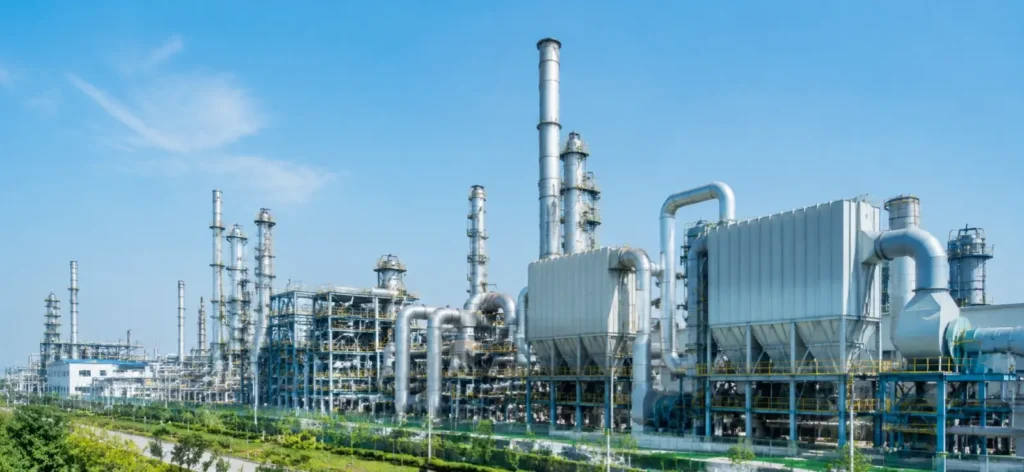
Filter Bags Designed for Chemical Processing Conditions
Chemical production covers a wide range of processes. A filter bag that works in a dry pigment packaging line may fail quickly in a humid and acidic drying system.
Temperature alone is not enough to select chemical plant filter bags. Moisture, gas composition, oxygen level, dust particle size, chemical concentration, and cleaning pressure also affect filter bag life.
The main filtration challenges in chemical plants include:
- Acidic or alkaline gases that attack the filter fiber
- Hot and humid gas that causes hydrolysis
- Fine powder that penetrates or blocks the filter media
- Sticky or hygroscopic dust that forms a hard dust cake
- Abrasive particles that wear the bag surface
- Combustible powder that creates static and explosion risks
- Temperature changes that cause condensation
- Strict particulate emission requirements
Aokai reviews these conditions before recommending the filter material, fabric construction, surface treatment, and filter bag design.
| Chemical Process | Main Filtration Challenge | Common Filter Media |
|---|---|---|
| Chemical powder drying | Heat, moisture and sticky dust | PPS, PTFE, acrylic |
| Milling and pulverizing | Fine particles and high dust loading | Polyester membrane, antistatic polyester |
| Pneumatic conveying | Abrasion and static buildup | Antistatic felt, wear-resistant media |
| Pigment production | Fine particles and strict emission limits | ePTFE membrane filter bags |
| Fertilizer production | Moisture, acidic gases and chemical attack | PPS, PTFE, acrylic |
| Titanium dioxide production | Acidic gas, moisture and fine powder | PTFE or PPS with membrane |
| Resin and polymer processing | Sticky and combustible powder | Antistatic media with surface treatment |
| Chemical packaging lines | Product recovery and fine dust control | Polyester or antistatic membrane bags |
| Reactor exhaust filtration | Variable gas chemistry and temperature | PPS, PTFE, aramid |
| Chemical product recovery | Product loss and fine particle capture | ePTFE membrane filter bags |
Recommended Filter Bags for Chemical Plants


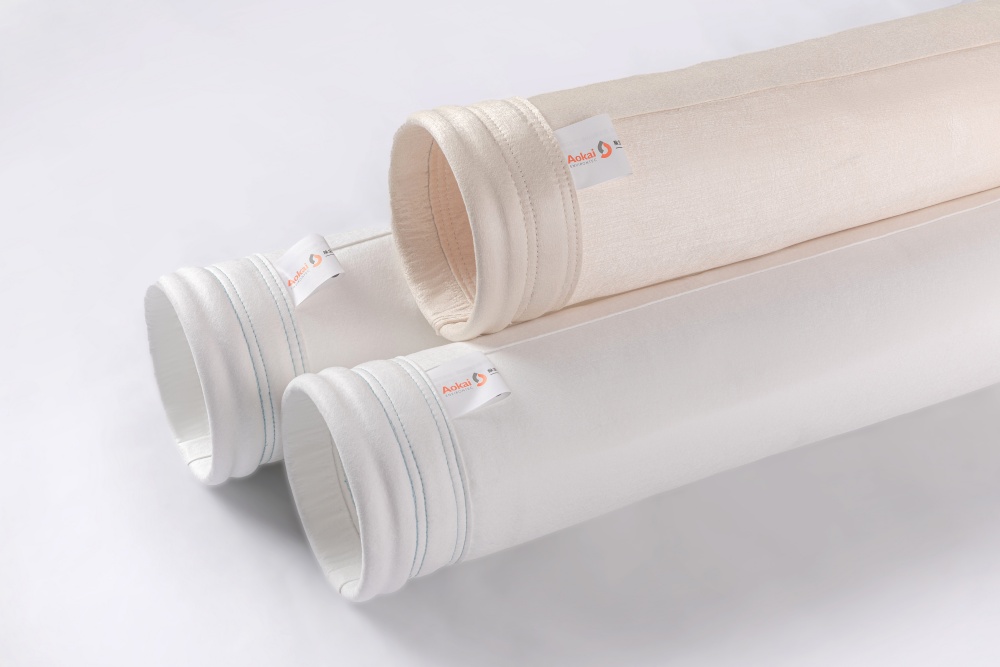
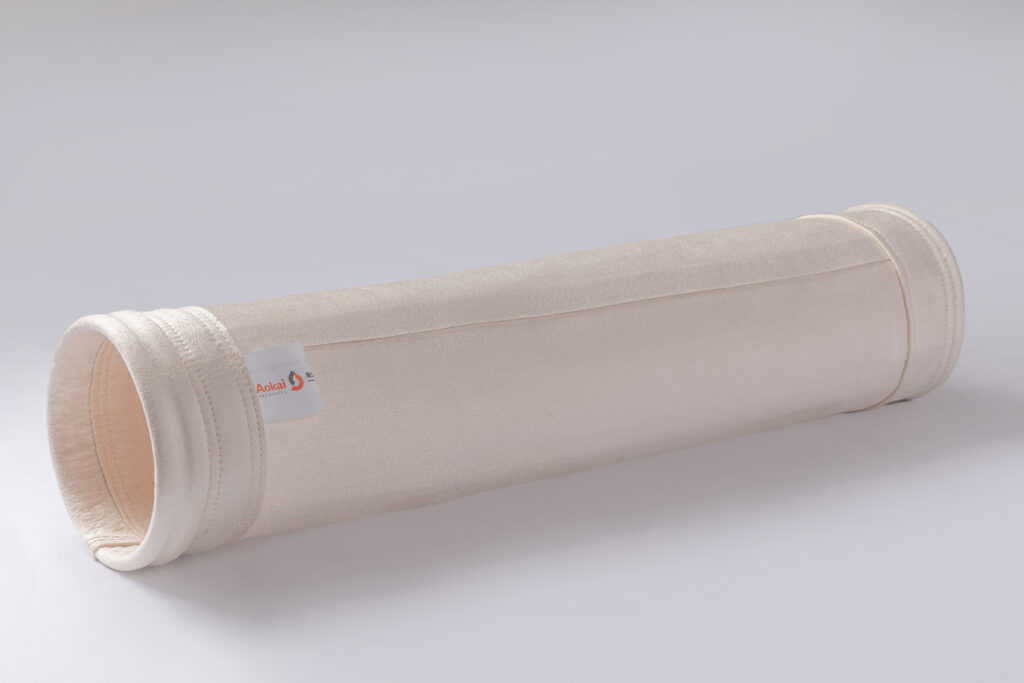
Technical Customization
-
Ultimate Chemical Stability: Options in PTFE, PPS, and specialized Acid-Resistant Aramid to handle the most aggressive chemical fumes.
-
PTFE Membrane Technology: Enhances surface filtration, allowing for easy cake release and preventing fine chemical dust from clogging the fabric.
-
High-Temperature Tolerance: Reliably operates in drying, calcining, and combustion processes with temperatures up to 260°C (500°F).
-
Anti-Static Safety: Integrated conductive fibers (stainless steel or carbon) to prevent static discharge in explosive chemical dust environments.

Chemical Plant Filter Bag Material Comparison
| Material | Continuous Temperature | Moisture and Hydrolysis Resistance | Chemical Resistance | Main Limitation |
|---|---|---|---|---|
| Polyester | Up to 130°C | Limited in hot and humid gas | Moderate | Hydrolysis risk |
| Acrylic | 125–130°C | Good | Good resistance to many acids | Limited temperature range |
| PPS | Up to 160°C | Excellent | Very good | Sensitive to oxidation |
| Aramid | Up to 200–204°C | Limited | Moderate | Not ideal for hot, humid and acidic gas |
| PTFE | Up to 240°C | Excellent | Excellent | Higher material cost |
| Antistatic media | Based on base fiber | Based on base fiber | Based on base fiber | Requires correct grounding |
Success Story
Improving Filtration Lifespan for a Leading TiO2 Manufacturer
The Challenge:
A major chemical plant producing Titanium Dioxide was struggling with frequent bag failures. Their existing polyester bags were degrading every 3 months due to high acidity and moisture, leading to costly downtime and emission spikes.
Our Solution:
After analyzing the flue gas composition, we replaced their filters with 100% PTFE Needle Felt Filter Bags with ePTFE Membrane. We also optimized the Bag Top design to ensure a 100% leak-proof seal with the cell plate.
Key Results:
>24 months
Extended Lifespan
<5mg/m³
Emission Control
-30%
Energy Consumption
HELP & SUPPORT
Technical FAQ
PTFE is usually the safest choice for highly corrosive, humid, or high-temperature chemical processes. However, it is not required for every application. PPS may be more economical for acidic and humid gas within its temperature and oxidation limits. Acrylic works well in moderate-temperature, mildly acidic conditions, while polyester is suitable for dry chemical powder. The final choice depends on temperature, moisture, gas composition, oxygen level, dust properties, and the baghouse cleaning system.
-
Chemical plants should use PTFE filter bags when the gas contains strong acids, alkalis, high moisture, or other compounds that can quickly damage standard fibers. PTFE is also suitable for elevated temperatures and fine chemical powder with strict emission requirements. An ePTFE membrane can improve surface filtration and dust release. Because PTFE costs more than polyester, acrylic, and PPS, the operating conditions should justify the additional cost.
Yes. PPS filter bags are well suited to many acidic, alkaline, humid, and hydrolysis-prone gas streams. They are often used in chemical drying, fertilizer production, boilers, and sulfur-containing processes. However, PPS is sensitive to oxidation. High oxygen levels, elevated temperatures, and strong oxidizing chemicals can shorten its service life. These conditions should be reviewed together before PPS filter bags are selected.
Yes. Polyester filter bags can be used for dry chemical powder at moderate temperatures. They provide good mechanical strength, abrasion resistance, and economical dust collection. However, polyester is vulnerable to hydrolysis when heat and moisture occur together. It is also unsuitable for some strongly corrosive chemicals. Acrylic, PPS, or PTFE may be a better choice when the process involves high humidity, condensation, acidic gas, or aggressive chemical exposure.
Start by confirming whether the dust is combustible and whether the process can generate static electricity. Antistatic filter media may be required to help dissipate static charge. The bags must be correctly grounded through the baghouse structure. Temperature, chemical resistance, moisture, and particle characteristics must also be considered when selecting the base fiber. Antistatic filter bags should be used as part of a complete explosion-protection system, including proper grounding, isolation, venting, and operating controls.
Yes. An ePTFE membrane can improve the filtration and release of many fine, sticky, or hygroscopic chemical powders. The membrane keeps most particles on the filter surface, which reduces deep dust penetration and supports more effective pulse cleaning. However, it cannot correct severe condensation, unsuitable cleaning settings, or wet paste-like dust. The membrane and base filter material must also resist the temperature, moisture, and chemical composition of the process gas.
Chemical plant filter bags may last from several months to several years, depending on the operating conditions. Temperature, moisture, chemical concentration, oxidation, abrasion, cleaning frequency, and baghouse condition all affect service life. Premature failure often points to the wrong filter material, condensation, excessive pulse pressure, cage damage, or chemical attack. Reviewing damaged bags and operating data is the most reliable way to identify the cause and improve replacement intervals.
Contact Us
*All information will be kept confidential.