


Pulse Jet Filter Bag
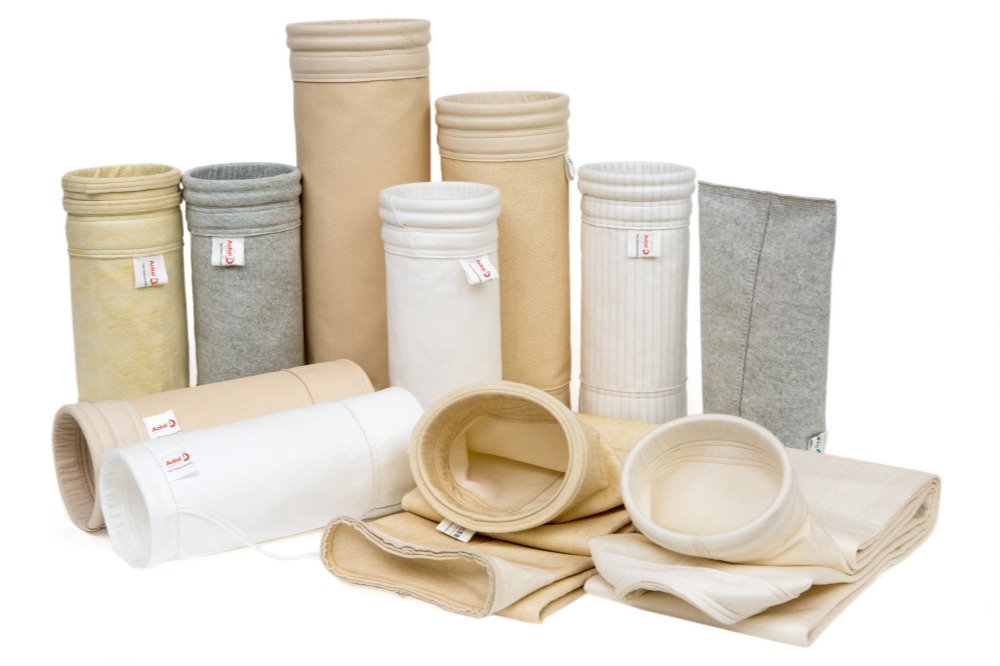
A pulse jet filter bag is the heart of a pulse jet baghouse system. It is a specialized industrial filtering component, usually cylindrical in shape, designed to capture dust and particulate matter from industrial gas streams. Unlike other filtration methods, these bags are cleaned by a high-pressure burst of compressed air (the “pulse”).
It is usually made of the following materials:
- Polyester material.
- PTFE membrane treatment.
- 100% PTFE material.
- PPS material.
- P84 material.
- Aramid material.
- Fiberglass material.
Working Principle
During operation, dust-laden gas enters the baghouse and passes through the filter media from the outside to the inside. The dust is trapped on the outer surface of the bag, forming a “dust cake,” while clean air exits through the top. When the pressure drop reaches a certain level, a pulse of compressed air is shot down into the bag, causing it to expand rapidly and shake off the accumulated dust into a hopper below.

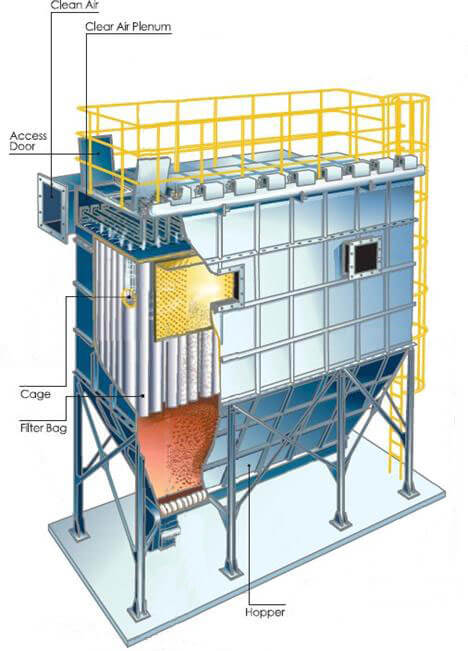
Core Components and Structure of Pulse Jet Filter Bag
- High-Quality Filter Media: Typically made from needle felts like Polyester, PPS, or PTFE. We offer advanced surface treatments such as PTFE membrane to enhance filtration and dust release.
- Sturdy Bag Head Design: Featuring various top configurations including snap rings, cords, or cut edges. These designs ensure a precise fit and a leak-proof seal with the tube sheet, sometimes incorporating grounding wires for static dissipation.
- Reinforced Seam Construction: Our Pulse Jet Filter Bag features high-quality seams (sewn or welded) designed for the lowest emissions. Additional PTFE seam sealing is available for ultra-fine dust applications.
- Robust Floor/Bottom Construction: To extend service life, the bottom is double-layered or features reinforced floor covering to withstand mechanical stress and high-velocity abrasion.
- Support Structure (Filter Cage): A metal skeleton that provides internal stability. For specific applications, stiffening rings can be integrated for improved structural integrity.
Filter Media Selection
| Fibre types | Product code | Weight (g/m2) | Continuous Temperature | Peak Temperature | Remark |
|---|---|---|---|---|---|
| Polyester | PE | 450-600 | 130°C | 150°C | Good resistance to oxidation,while limited resistance toacids and alkalis. Service lifewill be affected by hydrolysisat high temperature. |
| Polyacrylonitrile | PAC | 500-550 | 130°C | 150°C | Good resistance to hydrolysis. |
| Polyphenylene Sulfide | PPS | 500-650 | 160°C | 190°C | Moderate resistance to oxida-tion, but excellent resistance toacids, alkali's and hydrolysis. |
| m-Aramide | Nomex/Conex | 400-600 | 204°C | 240°C | Service life will be affectedby hydrolysis at high tem-perature. |
| Polyimide | PI/P84 | 750-800 | 240°C | 260°C | Excellent resistance to highpeak temperature. |
| Polytetrafluoro ethylene | PTFE | 500-550 | 240°C | 260°C | Excellent resistance to allchemical influences. |
| Fiberglass | GL | 750-900 | 260°C | 280°C | Excellent resistance to oxida-tion. Sensitive to mechanicalstress. |

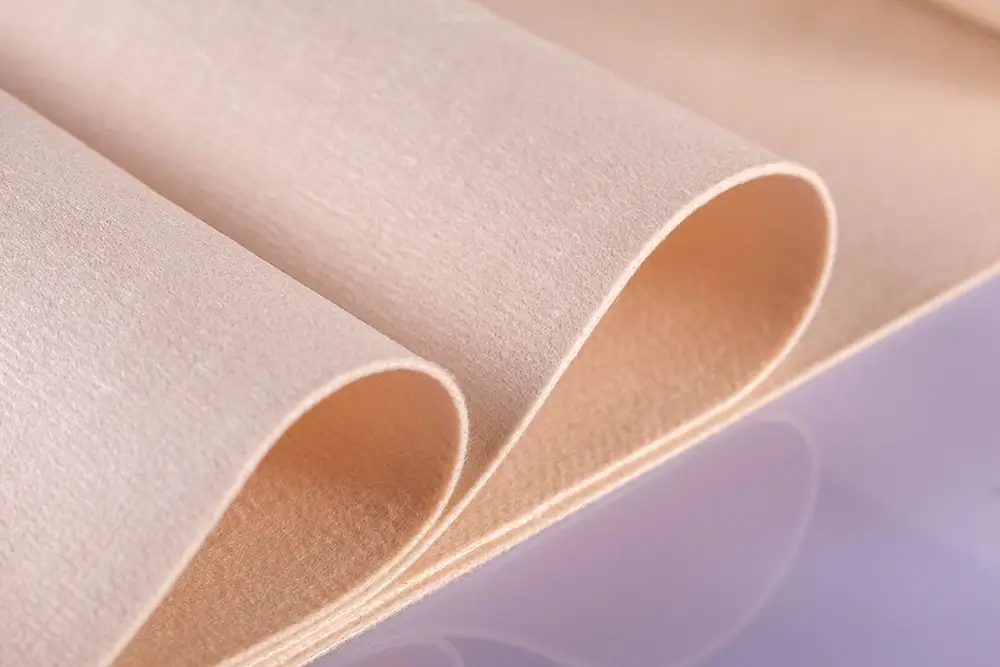

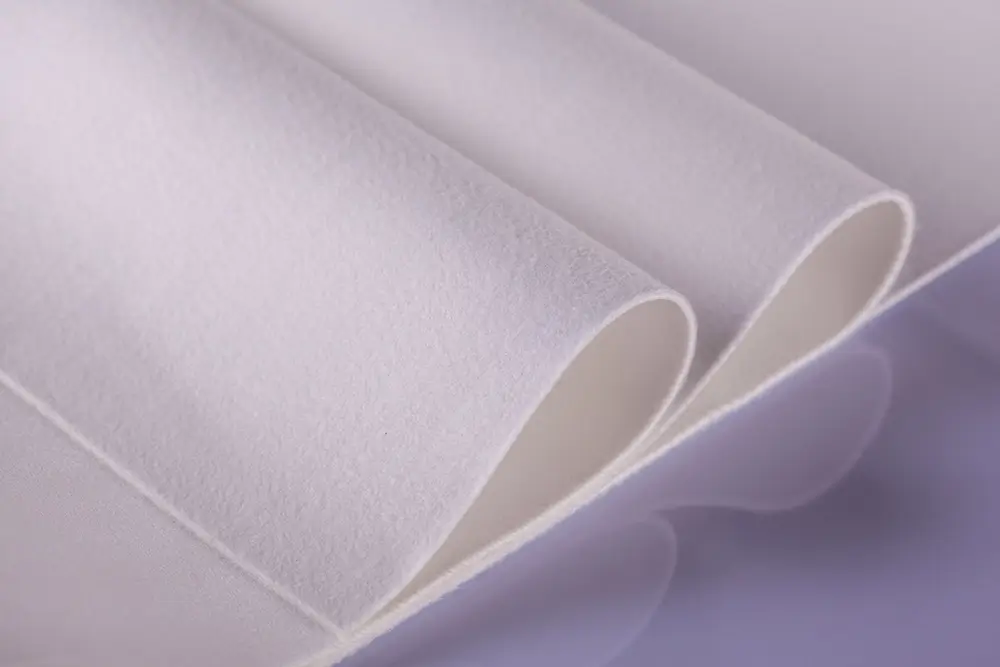
Common Shapes of Pulse Jet Filter Bags
In industrial filtration, the geometry of a Pulse Jet Filter Bag is a critical factor that determines the filtration area, cleaning efficiency, and space utilization of the baghouse. Depending on the equipment design and operational requirements, these bags are manufactured in several distinct shapes.
Cylindrical (Round) Filter Bags
This is the most widely used shape in the industry.
-
Design: A standard circular tube supported by a cylindrical wire cage.
-
Key Advantage: Offers the most uniform distribution of pulse-jet energy and internal pressure, leading to stable cleaning and longer mechanical life.
-
Best For: General-purpose industrial dust collection across all sectors.

Envelope (Flat) Filter Bags
Designed for compact environments where floor space is limited.
-
Design: A slim, rectangular profile that resembles an envelope.
-
Key Advantage: It allows for a significantly higher filtration surface area within a smaller baghouse footprint (up to 40% more compared to round bags).
-
Best For: Low-headroom installations, indoor dust collectors, and modular systems.

Oval (Elliptical) Filter Bags
A hybrid design that balances the benefits of round and flat bags.
-
Design: An elongated oval cross-section.
-
Key Advantage: Provides better space utilization than round bags while maintaining higher structural integrity and easier cleaning than traditional flat bags.
-
Best For: Specialized OEM dust collection equipment.

Comparison Summary Table
| Shape | Space Efficiency | Cleaning Ease | Cost-Effectiveness | Best Application |
| Cylindrical | Moderate | Excellent | High (Standard) | Most common industrial use |
| Envelope | High | Moderate | Moderate | Restricted installation space |
| Oval | High | Good | Moderate | Specialized OEM designs |