


Aokai manufactures custom baghouse filter bags for pulse-jet, reverse-air, and shaker dust collection systems. We supply replacement filter bags based on your baghouse type, bag size, dust characteristics, operating temperature, gas condition, cleaning method, and emission requirements.
Our baghouse filter bags are available in polyester, acrylic, aramid / Nomex, PPS, P84, PTFE, fiberglass, and PTFE membrane media. Each filter bag can be customized with the right top construction, bottom design, sewing thread, reinforcement, surface treatment, and cage fit.
What Are Baghouse Filter Bags?
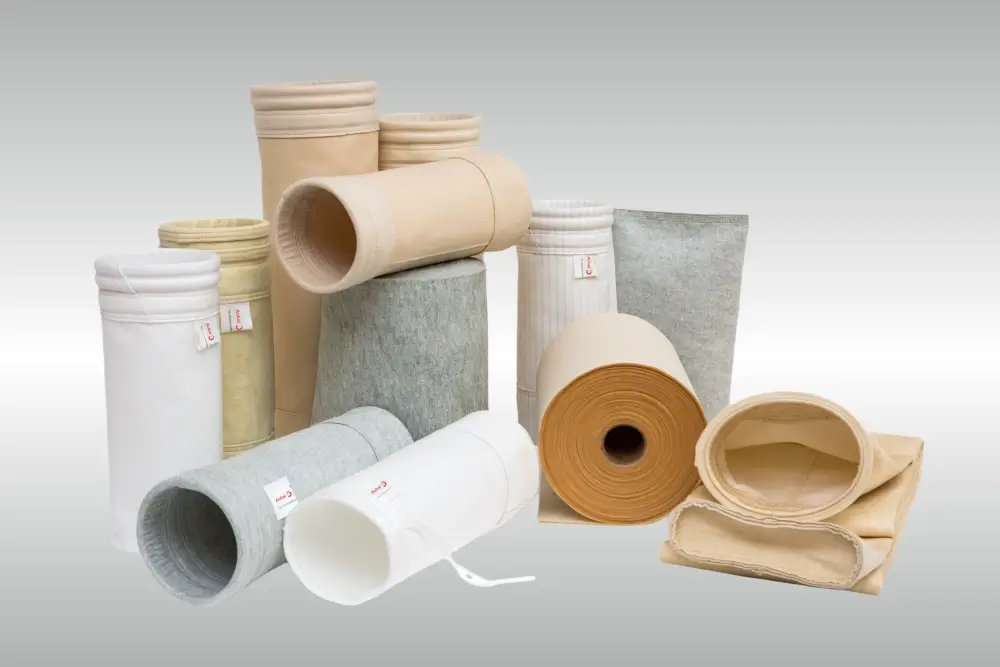
Baghouse filter bags are fabric filter elements installed inside industrial baghouse dust collectors. They capture dust from process air or flue gas and help keep the dust collection system stable, efficient, and compliant with emission requirements.
In most baghouse systems, dusty air passes through the filter media while dust is retained on the filter bag surface. Clean air exits through the outlet, and the dust cake is removed by pulse-jet cleaning, reverse-air cleaning, or mechanical shaking.
A suitable baghouse filter bag must match the dust collector design, tube sheet, cage, cleaning method, operating temperature, dust properties, gas chemistry, and required service life.
Baghouse Filter Bags by Dust Collector Type
Different baghouse systems require different filter bag structures. A filter bag that works well in a pulse-jet baghouse may not fit a reverse-air or shaker system.

Pulse-jet baghouses are one of the most common dust collection systems in modern industrial plants. The filter bags are usually supported by metal filter cages and cleaned by short bursts of compressed air. During operation, dust collects on the outside surface of the filter bag. The pulse cleaning system releases the dust cake and keeps airflow stable.
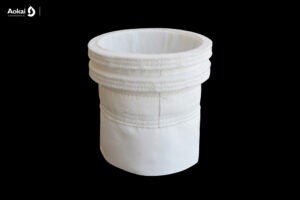
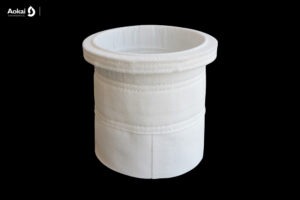
Pulse-jet baghouse filter bags need good dimensional accuracy, stable air permeability, strong stitching, and a proper seal at the tube sheet. Common top designs include snap band, flange top, ring top, soft cuff, and raw edge construction.

Reverse-air baghouses use a low-pressure reverse airflow to clean the filter bags. Compared with pulse-jet systems, reverse-air filter bags are often larger and may require support rings, anti-collapse rings, or special hanging structures. The cleaning action is gentler, so the filter bag design must support stable shape retention during long-term operation.
Reverse-air baghouse filter bags are commonly used in high-temperature and large-volume gas filtration systems. Typic
Shaker baghouses clean filter bags by mechanical shaking. The shaking action loosens the dust cake from the filter bag surface and drops it into the hopper. This type of dust collector is commonly used in woodworking, grain processing, foundries, feed production, and general dry dust collection.
Shaker baghouse filter bags may use felt or woven filter media, depending on the dust type, air volume, and cleaning frequency. The bag must be flexible enough for shaking, while still strong enough to resist wear and repeated movement.
Parameter Comparison Table for Different Baghouse Filter Bags
| Baghouse Type | Common Filter Bag Style | Typical Top Construction |
|---|---|---|
| Pulse-Jet Baghouse | Cylindrical filter bags supported by cages | Snap band, flange top, ring top, raw edge, soft cuff |
| Reverse-Air Baghouse | Large filter bags with support rings or anti-collapse rings | Strap top, loop top, corded cuff, grommet top |
| Shaker Baghouse | Felt or woven filter bags cleaned by mechanical shaking | Loop, hanger, strap, grommet, corded cuff |
| Custom Baghouse Systems | Designed according to equipment drawing or old sample | Custom top and bottom design |
Baghouse Filter Bags Material
The material of a baghouse filter bag should be selected according to the actual operating conditions. Temperature alone is not enough. Moisture, acid gas, dust abrasion, cleaning pressure, and filtration velocity can all affect service life.

Nomex(Aramid) Baghouse Filter Bags
Continuous:204°C (399°F)
Peak Max:240°C (464°F)
Cement kilns, hot mix asphalt manufacturing, metallurgical dust collector, and chemical production furnaces.

PTFE Baghouse Filter Bags
Continuous:240°C (464°F)
Peak Max:260°C (500F)
Chemical incineration plants, waste-to-energy facilities, coal power generation, and highly volatile acid gas flues.

PPS Baghouse Filter Bags
Continuous:160°C (320°F)
Peak Max:190°C (374F)
Coal-fired industrial power plant flues, high-moisture biomass boilers, and dry waste flue gas purification.
P84 Baghouse Filter Bags
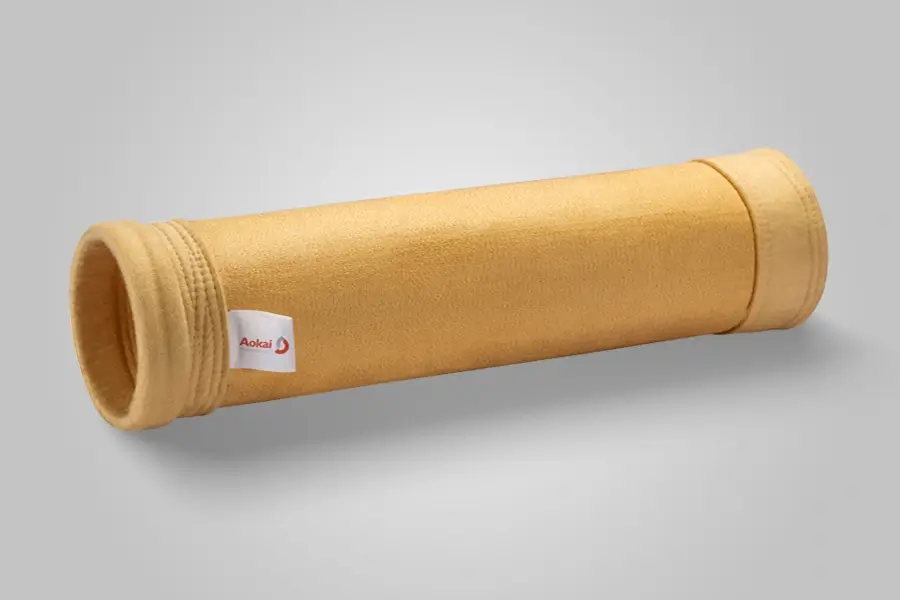
Continuous:240°C (464°F)
Peak Max:260°C (500F)
Waste incinerators, cement production kilns, smelting blast furnaces, and asphalt batching exhaust systems.

FMS Baghouse Filter Bags
Continuous:240°C (464°F)
Peak Max:260°C (500F)
Iron & steel smelting blast furnaces, calcium carbide furnaces, rotary cement kilns, and silicon power structures.

GlassFiber Baghouse Filter Bags
Continuous:260°C (500°F)
Peak Max:280°C (536°F)
High-temperature dry flue gas systems, cement production pre-heaters, and non-ferrous metal smelting baghouses.

Polyester Baghouse Filter Bags
Continuous:130°C (266°F)
Peak Max:150°C (302°F)
Cement grinding, packing plants, woodworking, food processing, mineral handling, and other dry dust collection systems operating below the media temperature limit.

Acrylic Baghouse Filter Bags
Continuous:130°C (266°F)
Peak Max:150°C (302°F)
Chemical plants, waste incineration, asphalt plants, and dust collection systems with moisture or mild acidic conditions.

Water & Oil Repellent Baghouse Filter Bags
Continuous:Based on Fabric
Peak Max:Based on Fabric
Dust collection in industries exposed to oily smoke, moisture, or sticky dust particles, including woodworking, chemical processing, and food production.

Antistatic Baghouse Filter Bags
Continuous:Based on Fabric
Peak Max:Based on Fabric
Coal grinding, aluminum powder, flour milling, chemical processing, mining, and explosive dust collection systems.

Custom Baghouse Filter Bags
Custom filter bags are designed according to your operating conditions, baghouse structure, dust characteristics, temperature, chemical environment, and filtration requirements. Aokai provides tailored solutions in material selection, size, shape, surface treatment, sewing method, and installation accessories to help improve filtration efficiency, extend service life, and reduce maintenance costs.

CareClean® Low Resistance Filter Bags
◎ Lower Emission(<5mg/Nm³)
◎ Higher Airflow Rate
◎ Lower Energy Cost
Baghouse Filter Bags Material Parameter Table
| Filter Bag Material | Typical Temperature Range | Main Advantages | Recommended Conditions |
|---|---|---|---|
| Polyester Filter Bags | Up to 130–150°C | Cost-effective, good abrasion resistance, easy cleaning | General dry dust, cement, woodworking, powder handling |
| Acrylic Filter Bags | Up to 125–140°C | Better hydrolysis resistance than polyester | Moist, low-temperature, mildly acidic dust collection |
| Aramid / Nomex Filter Bags | Up to 204°C | Good high-temperature resistance | Asphalt plants, cement plants, metallurgy |
| PPS Filter Bags | Up to 190°C | Good acid resistance and hydrolysis resistance | Coal-fired boilers, sulfur-containing flue gas, chemical dust |
| P84 Filter Bags | Up to 240°C | Fine dust capture and low-emission support | Cement kilns, waste incineration, strict emission control |
| Fiberglass Filter Bags | Up to 260°C for selected woven constructions | High-temperature resistance and dimensional stability | Cement, power generation, high-temperature baghouses |
| PTFE Filter Bags | Up to 240–260°C depending on structure | Excellent chemical resistance | Chemical processing, waste incineration, corrosive gas |
Custom Top and Bottom Constructions
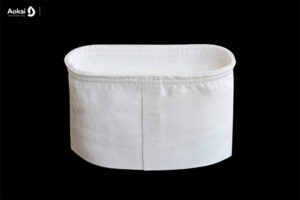
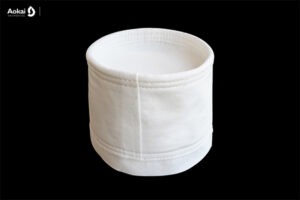
A baghouse filter bags must seal correctly and fit the cage, tube sheet, and cleaning system. Small errors in snap band size, cuff depth, bag length, or bottom reinforcement can cause dust leakage, difficult installation, abnormal wear, or premature failure.
-300x200.jpg "Baghouse Filter Bags 17")
-300x200.jpg "Baghouse Filter Bags 18")
HELP & SUPPORT
FAQ About Baghouse Filter Bags
Baghouse filter bags are fabric filter elements used inside industrial baghouse dust collectors. They capture dust from process air or flue gas and help control emissions. The right baghouse filter bag should match the dust collector type, filter cage, tube sheet, operating temperature, dust properties, gas chemistry, and cleaning method.
Common baghouse filter bag materials include polyester, acrylic, aramid / Nomex, PPS, P84, fiberglass, PTFE, and PTFE membrane media. Polyester is often used for normal dry dust. PPS is suitable for acidic gas and hydrolysis conditions. Aramid is common in asphalt plants. Fiberglass, P84, and PTFE are used for more demanding high-temperature or chemical conditions.
Start with the operating temperature, peak temperature, dust type, moisture level, gas composition, cleaning method, and emission target. Do not choose the material by temperature alone. Acid dew point, condensation, abrasion, filtration velocity, and cleaning pressure can also affect filter bag service life.
Pulse-jet filter bags are usually cylindrical bags supported by cages and cleaned by compressed air pulses. Reverse-air filter bags are often larger and cleaned by low-pressure reverse airflow. Shaker filter bags are cleaned by mechanical movement. Each system requires different top construction, bottom design, media structure, and reinforcement.
Yes. Aokai can manufacture replacement baghouse filter bags from an old sample, drawing, photo, or measured dimensions. Please provide the bag diameter, length, top construction, bottom design, material, operating temperature, dust type, cleaning method, and quantity for faster confirmation.
For quotation, please send the bag size, top style, bottom style, current material, operating temperature, dust type, industry, cleaning method, gas condition, and quantity. A drawing or old filter bag sample is very helpful. If the current filter bags fail too quickly, please also describe the failure problem.
Yes. PTFE membrane can be laminated onto polyester, PPS, aramid, P84, fiberglass, PTFE, and other base media. PTFE membrane baghouse filter bags are often selected for fine dust, sticky dust, high emission control, filter bag blinding, or high pressure drop problems.
Replacement time depends on the material, operating temperature, dust abrasion, gas chemistry, cleaning pressure, and maintenance condition. Bags should be checked when pressure drop rises, emissions increase, cleaning becomes difficult, or visible damage appears. Aokai can help review the working conditions and recommend a suitable replacement material.
Contact us
*All information will be kept confidential.