


Sektör İçgörüleri
How to Select Nomex Filter Bags for Asphalt Plants
Selecting Nomex filter bags for asphalt plants is not simply a temperature decision. A suitable filter bag must match the actual flue-gas temperature, mineral dust abrasion, oil fume, moisture level, gas chemistry, dust collector design, and cleaning method.
For many asphalt mixing plants, Nomex® or performance-equivalent meta-aramid filter bags are a reliable choice for dry, high-temperature, abrasive dust conditions. However, selecting the wrong finish, bag construction, or material grade can still lead to bag blinding, excessive pressure drop, premature wear, shrinking, or bag failure.
This guide explains how to select Nomex filter bags for asphalt plants step by step.
Trademark note: Nomex® is a registered trademark. In this article, “Nomex filter bags” refers to filter bags made with Nomex® fiber or performance-equivalent meta-aramid filter media, subject to the final material specification.
Quick Selection Checklist for Asphalt Plant Filter Bags
Before selecting a filter bag, collect the following information:
| Selection Factor | Information to Confirm | Why It Matters |
|---|---|---|
| Operating temperature | Normal temperature, peak temperature, spike duration | Determines whether meta-aramid filter media is suitable |
| Dust characteristics | Mineral dust, filler powder, particle size, abrasiveness | Affects media weight, wear resistance, and reinforcement design |
| Oil fume and sticky dust | Bitumen fume, incomplete combustion, hydrocarbon vapor | Helps determine whether PTFE membrane or water and oil repellent treatment is needed |
| Moisture and dew point | Moisture level, condensation history, baghouse temperature | High moisture can cause blinding and reduce Nomex bag life |
| Gas composition | Oxygen level, sulfur compounds, acid gas, combustion fuel | Influences chemical compatibility and material selection |
| Dust collector design | Pulse-jet, reverse-air, shaker, cage type, tube-sheet size | Determines top design, bottom structure, bag diameter, and length |
| Existing bag failure | Holes, hardening, shrinking, caking, high pressure drop | Helps identify the real reason for early replacement |
Why Asphalt Plants Need a Careful Filter Bag Selection Process
Asphalt mixing plants create a challenging filtration environment. The baghouse may handle hot aggregate dust, mineral filler, bitumen fume, fuel-combustion gases, moisture, and abrasive particles at the same time.
A filter bag that works well in a dry cement application may not perform equally well in an asphalt plant. Asphalt dust collectors often face three major risks:
- High-temperature gas and sudden temperature spikes
- Abrasive mineral dust and airflow erosion
- Sticky dust caused by oil fume, moisture, or incomplete combustion
For this reason, asphalt plant baghouse filter bags should be selected based on total operating conditions, not only on the maximum temperature.

1. Start With the Real Operating Temperature
The first step is to record the actual gas temperature at the baghouse inlet, not only the design temperature of the asphalt plant.
You should confirm:
- Normal operating temperature
- Highest short-term temperature
- Frequency and duration of temperature spikes
- Whether hot sparks or flame carryover can enter the baghouse
- Temperature differences between startup, normal production, and shutdown
For a typical meta-aramid filter media such as Aokai PRO845, the recommended continuous operating temperature is up to 204°C, with short-term surge resistance up to approximately 250°C. However, temperature alone does not determine filter bag life.
A short temperature spike may be acceptable under dry and stable gas conditions. Repeated overheating, sparks, oxidation, moisture, or acid gas exposure can significantly shorten the service life of Nomex filter bags.
2. Evaluate Dust Abrasion, Oil Fume, and Moisture
The dust characteristics in asphalt plants can vary significantly depending on aggregate type, filler material, recycled asphalt content, fuel type, and combustion efficiency.
Abrasive Mineral Dust
Mineral powder and aggregate fines can cause mechanical wear, especially at the lower section of the filter bag or areas exposed to high airflow impact.
For highly abrasive conditions, consider:
- Higher-strength meta-aramid needle felt
- Reinforced bag bottoms
- Wear-resistant cuff or bottom construction
- Improved filter cage quality
- Correct pulse-cleaning pressure and venturi alignment
Oil Fume and Sticky Dust
Bitumen fume, unburned hydrocarbons, and incomplete combustion can create sticky dust deposits on the bag surface. This may cause bag blinding, high differential pressure, and frequent pulse cleaning.
For these conditions, a PTFE membrane or low-adhesion surface finish can help improve dust release. Water and oil repellent treatment may also help reduce local moisture and hydrocarbon adhesion.
However, PTFE membrane treatment should not be used as a substitute for fixing serious condensation or combustion problems. The root cause of moisture, oil fume, or incomplete combustion should also be addressed.
Moisture and Dew Point Risk
Nomex filter bags are generally more suitable for dry, high-temperature filtration conditions. When the baghouse temperature approaches the dew point, moisture may combine with dust and oil fume, causing rapid blockage or chemical damage.
If the plant frequently experiences condensation, wet gas, strong acid gas, or high sulfur conditions, PPS, PTFE, or another more chemically resistant filter material may be a better option.
3. Select the Right Nomex Filter Media Construction
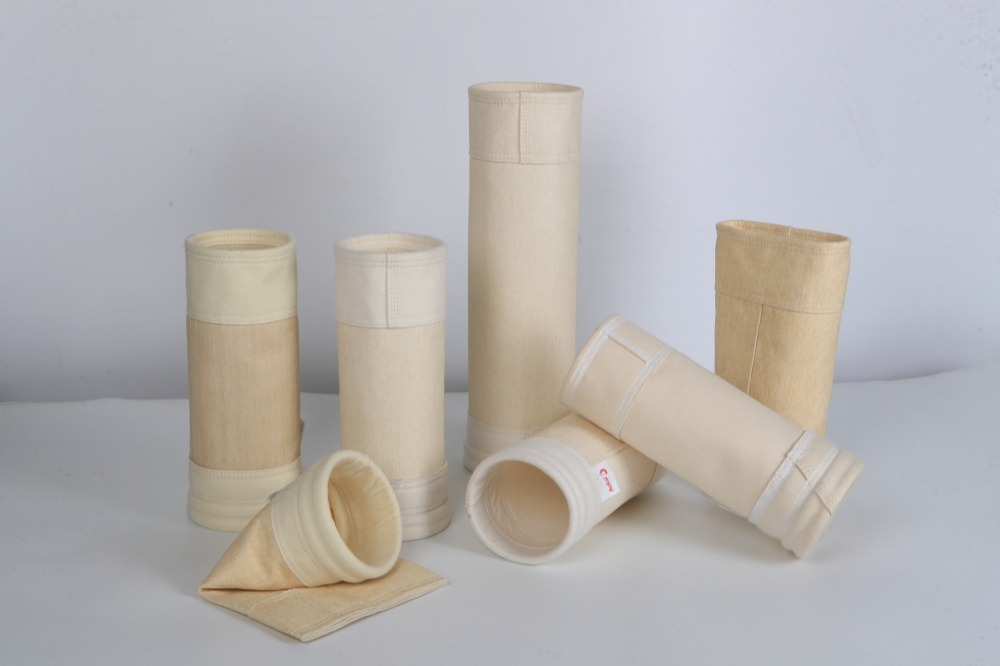
Choosing Nomex filter bags means more than selecting meta-aramid fiber. The final filter bag performance also depends on the fabric weight, thickness, permeability, scrim, surface treatment, and bag construction.
Typical options include:
| Option | Main Function | Recommended Situation |
|---|---|---|
| Singeing and calendering | Reduces loose fibers and improves dust release | Dry mineral dust and standard asphalt applications |
| PTFE membran | Creates surface filtration and improves dust cake release | Sticky dust, fine particulate, lower emission targets |
| Water and oil repellent finish | Helps resist moisture and light hydrocarbon adhesion | Oil fume, local cooling, moderate moisture risk |
| Anti-statik işlem | Reduces static charge accumulation | Applications with confirmed electrostatic risk |
| Reinforced bottom | Improves wear resistance | High-abrasion or high-airflow impact areas |
| Double stitching or seam reinforcement | Improves mechanical durability | Heavy-duty replacement applications |
For many asphalt plants, a PTFE membrane meta-aramid filter bag is a practical option when dust is sticky and pressure drop control is important. For dry and abrasive applications, standard meta-aramid needle felt with appropriate reinforcement may be sufficient.
4. Match the Filter Bag to the Dust Collector Design

Even the right filter media can fail early if the bag design does not match the baghouse.
Before ordering replacement Nomex filter bags, confirm:
- Filter bag diameter
- Filter bag length
- Top design: snap band, ring top, cuff top, flange top, or other configuration
- Bottom design: disc bottom, reinforced bottom, flat bottom, or custom design
- Filter cage diameter and length
- Tube-sheet hole size
- Pulse-jet pressure and cleaning frequency
- Presence of venturi tubes, cage burrs, or misalignment
Incorrect bag diameter or snap-band dimensions may cause leakage around the tube sheet. Poor cage quality, rough welding points, or damaged venturi tubes can scratch the filter bags and create holes.
A replacement filter bag should therefore be selected as a complete system component, not only as a piece of filter fabric.
5. When Are Nomex Filtre Torbaları the Right Choice for Asphalt Plants?
Nomex filter bags for asphalt plants are usually a strong option when the following conditions are present:
- Gas temperature is stable in the high-temperature range
- Dust is mainly dry mineral powder or abrasive aggregate fines
- The baghouse operates above the dew point
- Acid gas concentration is not severe
- Moisture is controlled
- The application requires good heat resistance and mechanical strength
- The dust collector uses properly designed cages and stable pulse cleaning
Nomex filter bags may not be the best choice when the system has frequent condensation, strong sulfur-containing gases, heavy acid gas, severe chemical corrosion, or continuous temperatures above the recommended limit.
In these cases, PPS filter bags, PTFE filter bags, fiberglass composite media, or other high-performance materials should be evaluated.
6. Avoid Common Causes of Early Nomex Filter Bag Failure
Premature bag failure is often caused by operating conditions rather than manufacturing defects.
Common failure causes include:
- Excessive operating temperature or repeated temperature spikes
- Sparks, flame carryover, or hot particle burn-through
- Condensation caused by low baghouse temperature
- Sticky dust from oil fume or incomplete combustion
- Oxidation or chemical attack
- Abrasive dust wear and airflow erosion
- Incorrect pulse-cleaning pressure
- Poor filter cage quality
- Improper installation
- Incorrect bag diameter, length, or top design
Before replacing a complete set of bags, inspect failed bags and identify the damage pattern. A hole near the bottom may indicate abrasion. Hard and brittle fabric may indicate overheating or oxidation. Surface caking may indicate moisture, oil fume, or poor dust release.
Example: Nomex Filter Bag Selection for an Asphalt Plant
For a pulse-jet asphalt plant baghouse handling dry mineral dust at approximately 170–195°C, a meta-aramid filter bag may be a suitable solution.
If the system also has bitumen fume, sticky dust, or frequent pressure-drop problems, a PTFE membrane meta-aramid filter bag with reinforced bottom construction may provide better dust release and improved service stability.
If the same system experiences frequent condensation or strong acidic gas conditions, the selection should be reassessed before using Nomex filter bags.
Sonuç
The best Nomex filter bags for asphalt plants are selected by matching the filter media, surface treatment, bag construction, and dust collector design to real operating conditions.
Do not select filter bags based only on temperature or the previous bag material. Review dust abrasion, oil fume, moisture, gas chemistry, pressure drop, pulse cleaning, and cage condition before making a replacement decision.
For high-temperature, dry, and abrasive asphalt dust collection, custom Nomex filter bags can provide reliable filtration performance when properly specified.
