

Sektör İçgörüleri
Needle Felt vs. Woven Filter Bags: Which Should You Choose?
Needle Felt vs. Woven Filter Bags: Which Should You Choose?
Needle felt filter bags are generally used in pulse-jet baghouses because their three-dimensional fiber structure supports fine-dust filtration and higher filtration velocities. Woven filter bags are more common in shaker, reverse-air, and certain high-temperature systems because woven fabrics provide good tensile strength and dimensional stability. The correct choice depends on the cleaning system, dust properties, temperature, gas chemistry, filtration velocity, and emission requirements.
What Is Needle Felt Filter Media?
Needle felt filter media is a nonwoven material used in industrial dust collection. Loose fibers are arranged into fiber webs and mechanically entangled by thousands of barbed needles. This process creates a three-dimensional filtration structure that captures dust both on the surface and within the media.
Most needle felt consists of three layers: an upper fiber layer, a supporting scrim in the middle, and a lower fiber layer. The scrim provides tensile strength and dimensional stability. The upper and lower fiber layers control filtration, airflow, dust release, abrasion resistance, and surface performance. Their fiber type, density, and structure can be adjusted for different operating conditions.
Common needle felt materials include polyester, acrylic, aramid or Nomex-type fiber, PPS, P84, PTFE, and fiberglass. Each material has different temperature, moisture, hydrolysis, oxidation, and chemical-resistance limits. Fiber blends can also be customized to balance performance, service life, and cost.
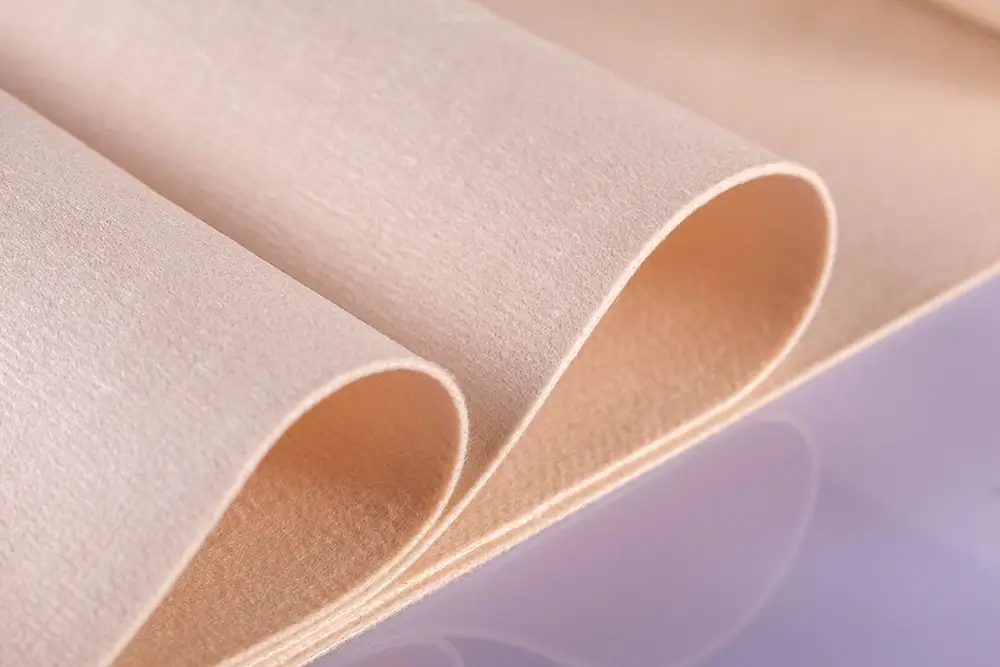
Needle felt filter bags are commonly used in pulse-jet baghouses. Compressed-air pulses flex the filter bags and remove the dust cake from the surface. The media can also receive singeing, calendaring, impregnation, anti-static treatment, or an ePTFE membrane to improve dust release and filtration performance.
What Is Woven Filter Media?
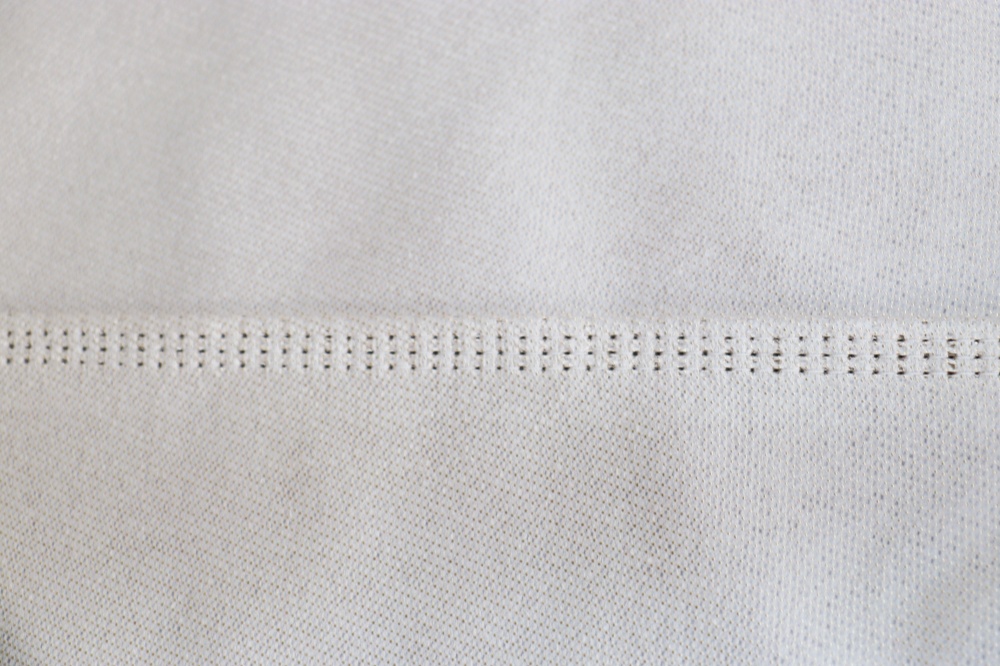
Woven filter media is produced by interlacing two sets of yarns at right angles. The lengthwise yarns are called warp yarns, while the crosswise yarns are called weft yarns. This organized structure gives the fabric good tensile strength, dimensional stability, and controlled air permeability.
The weave pattern affects filtration, flexibility, strength, and dust release. Plain weave has a tight and stable structure. Twill weave is more flexible and provides good strength. Satin weave has a smoother surface and can improve dust release, but its resistance to abrasion depends on the yarn and fabric design.
Common woven filter media include fiberglass, polyester, acrylic, PTFE, polypropylene, and other industrial yarns. Woven fiberglass is widely used in high-temperature dust collection because it has good heat resistance and dimensional stability. Surface finishes, chemical treatments, and ePTFE membranes can be added to improve chemical resistance, dust release, and fine-particle filtration.
Woven filter bags are commonly used in shaker and reverse-air baghouses, where cleaning forces are relatively gentle. Some specially designed woven media can also be used in pulse-jet systems. However, the fabric construction, surface treatment, cage design, cleaning pressure, and filtration velocity must be checked before selection.
Needle Felt vs. Woven Filter Bags Comparison Table
| Comparison | Needle Felt Filter Bags | Woven Filter Bags |
|---|---|---|
| Structure | Mechanically entangled fibers supported by a scrim | Interlaced warp and weft yarns |
| Cleaning system | Commonly used with pulse-jet cleaning | Commonly used with shaker or reverse-air cleaning |
| Fine-dust capture | Good, especially with an ePTFE membrane | Often depends more on dust cake and surface treatment |
| Filtration velocity | Generally suitable for higher filtration velocities | Commonly used at lower filtration velocities |
| Mechanical properties | Flexible with good abrasion resistance | High tensile strength and dimensional stability |
| Common materials | Polyester, Acrylic, Aramid, PPS, P84 and PTFE | Fiberglass, Polyester, Acrylic and PTFE |
| Typical applications | Pulse-jet baghouses and general industrial dust collection | Reverse-air systems, shaker collectors and high-temperature filtration |
Can Needle Felt vs Woven Filter Bags Be Customized?
Aokai can customize both needle felt and woven filter media according to the dust collector design and operating conditions. Fiber blends, fabric weight, thickness, air permeability, scrim, weave structure, surface treatment, and ePTFE membrane options can be adjusted to meet specific requirements.
If the filter media specifications have not been confirmed, send us the cleaning method, operating temperature, dust properties, moisture, gas chemistry, filtration velocity, and emission requirements. Our engineers can recommend a suitable filter media and bag construction.
