


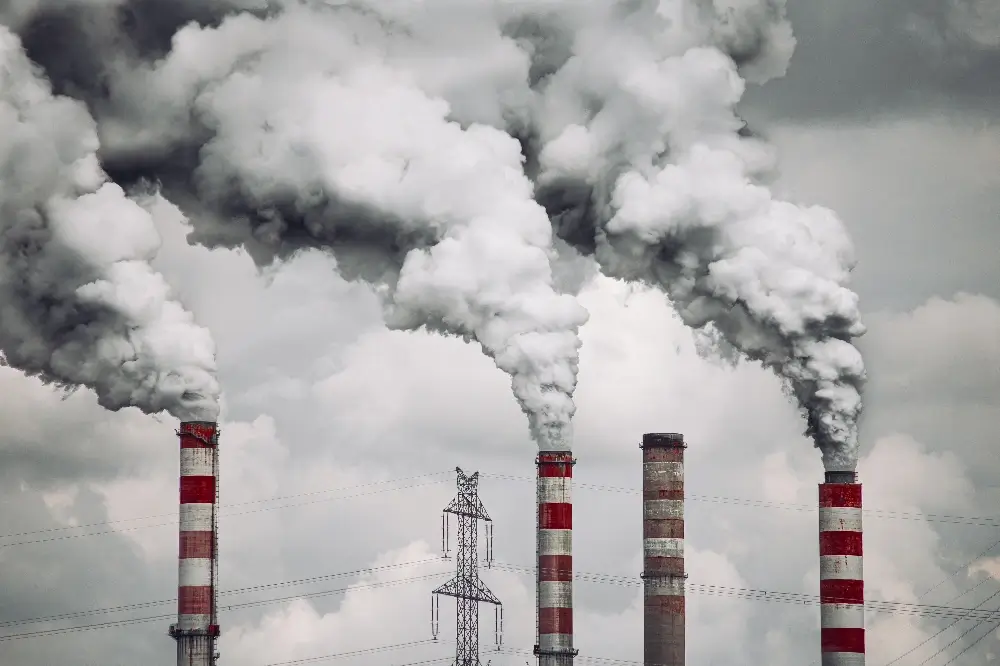
Steel production creates abrasive dust, fine metal oxide fume, sparks and high-temperature gas. These conditions vary greatly between raw material handling, sintering, blast furnaces, electric arc furnaces and finishing processes. The same filter bag cannot perform well at every collection point.
Aokai manufactures custom filter bags for steel plants based on the actual baghouse inlet temperature, dust properties, gas chemistry and cleaning method. Available media include polyester, aramid, PPS, P84, fiberglass composite, FMS and PTFE.
We can manufacture replacement bags from your drawing, existing sample or baghouse dimensions.
Dust Collection Challenges in Steel Plants
A steel plant contains many different dust collection points. Some operate near ambient temperature. Others handle hot furnace fume, fine metal oxide particles or gases containing moisture and sulfur compounds.
The main filtration challenges include:
- High and fluctuating baghouse inlet temperatures
- Abrasive iron oxide, coke, lime and mineral dust
- Fine fume generated by EAF, BOF and ladle operations
- Sparks and hot particles entering the dust collector
- Moisture, condensation and acid gas
- High dust loading and frequent pulse cleaning
- Bag-to-cage wear caused by poor fit or damaged cages
- High differential pressure caused by dust penetration or poor cleaning
Media selection should be based on the conditions at the baghouse inlet. Furnace temperature alone does not determine the correct filter bag material.
Steel Mill Filter Bags by Process Area
| Steel plant process | Typical dust condition | Main filtration challenge | Recommended direction |
|---|---|---|---|
| Raw material handling | Dry ore, lime, coke and mineral dust | Abrasion, high dust loading and possible static risk | Polyester, anti-static polyester or abrasion-resistant needle felt |
| Coke and coal handling | Fine, dry and potentially combustible dust | Static charge, dust release and abrasion | Anti-static filter media after a site safety review |
| Sinter plant | Hot, abrasive dust with changing moisture and gas chemistry | Temperature, SOx, condensation and fine dust | PPS, aramid, fiberglass composite, FMS or PTFE based on gas analysis |
| Blast furnace and casthouse | Hot iron oxide dust, fumes and possible sparks | Temperature fluctuation, abrasion and hot particles | Aramid, FMS or fiberglass composite with suitable pre-treatment |
| Basic oxygen furnace | Fine metal oxide fume and intermittent temperature peaks | Fine particle capture, heat and sparks | Fiberglass composite, FMS, P84 or PTFE-based media |
| Electric arc furnace | Fine fume, high dust loading and temperature variation | Temperature spikes, sparks and demanding cleaning cycles | High-temperature fiberglass, FMS, P84 or PTFE media |
| Ladle furnace | Intermittent hot fume and metal oxide dust | Temperature fluctuation and fine dust | Aramid, P84, FMS or fiberglass composite |
| Casting and finishing | Metal scale, fine dust and fumes | Abrasion and variable temperature | Polyester, aramid or fiberglass depending on inlet temperature |
| Grinding and shot blasting | Fine metallic dust at lower temperatures | Abrasion and possible static risk | Abrasion-resistant or anti-static polyester media |
*This table is a preliminary guide. Final steel mill filter bags should be selected after reviewing the real gas and dust conditions.
High-Temperature Filter Bags for Steelworks
| Filter media | Typical continuous temperature | Main advantages | Important limitations |
|---|---|---|---|
| Polyester | Up to 130°C | Cost-effective, good strength and good abrasion resistance | Not suitable for sustained high heat or hydrolysis conditions |
| Aramid/Meta-Aramid | Up to 204°C | Good heat resistance, mechanical strength and abrasion resistance | Limited resistance to moisture, hydrolysis and strong acid gas |
| PPS | Up to 190°C | Good resistance to acid gas and hydrolysis | Oxygen level and peak temperature must be reviewed |
| P84 | Up to 240°C | Good fine-particle capture and high-temperature performance | Gas chemistry and hydrolysis conditions must be checked |
| Fiberglass composite/FMS | Approximately 240–260°C, depending on grade | High heat resistance and dimensional stability | Construction and cage fit are important because of flex and abrasion risk |
| PTFE | Up to 260°C | Strong chemical resistance, heat resistance and hydrolysis resistance | Higher initial cost; final design depends on the operating conditions |
Filter Media Selection for Steel Plant Baghouses

Polyester is suitable for dry, lower-temperature dust collection points such as material transfer, crushing, screening and selected finishing processes. It offers good mechanical strength and is economical for general dust control.
Anti-static polyester may be considered where the dust risk assessment identifies a need for controlled electrical conductivity.
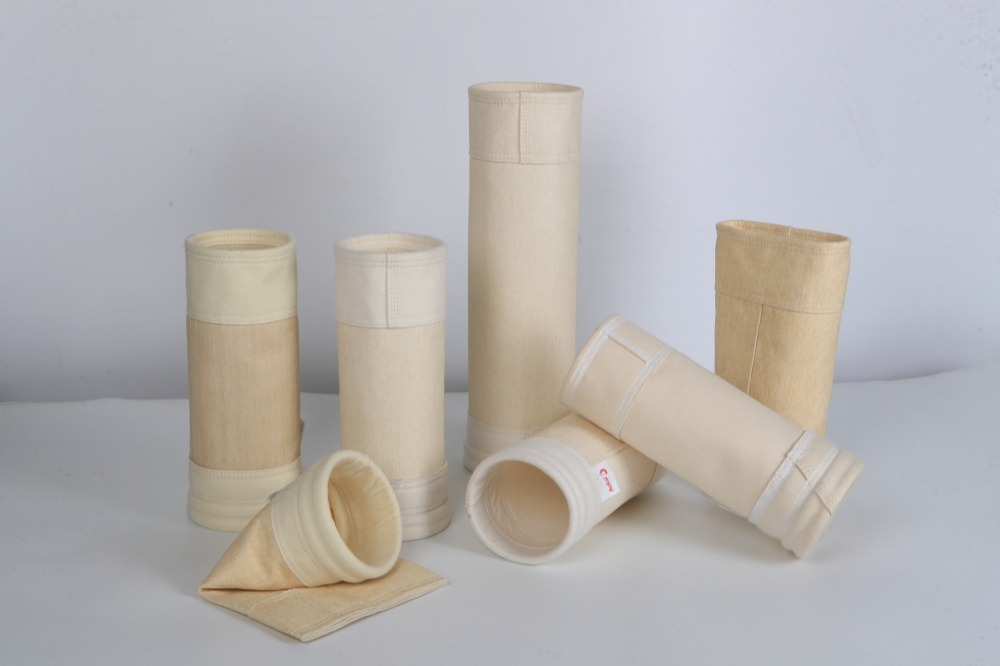
Aramid filter bags work well with hot, dry and abrasive dust. They are often considered for casthouse, ladle, casting and other elevated-temperature collection points.
Aramid should be reviewed carefully when the gas contains high moisture, frequent condensation or strong acid components.
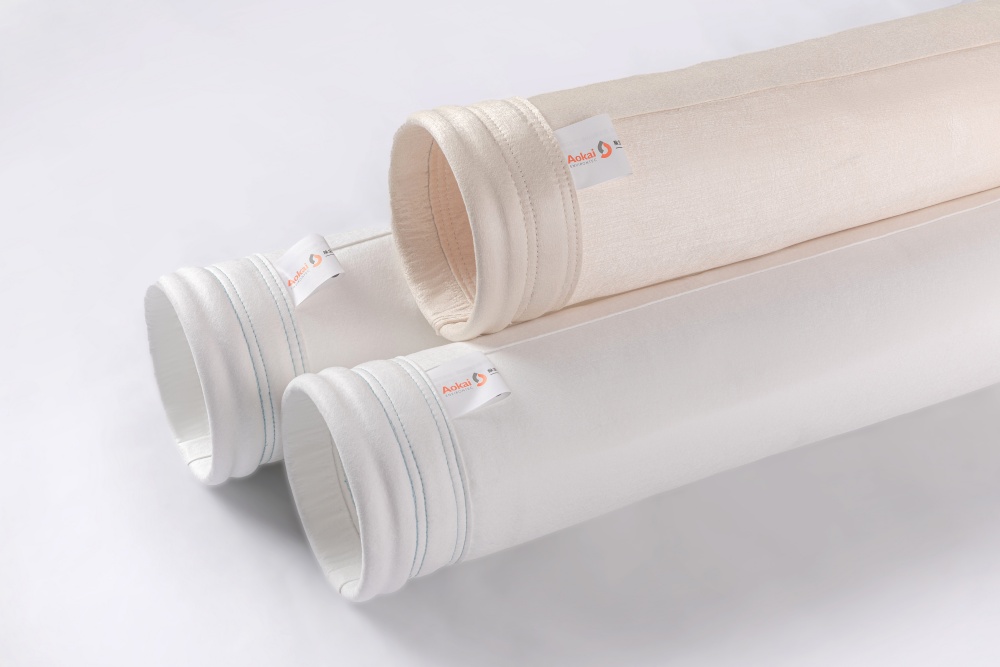
PPS can be suitable where the gas contains moisture or sulfur compounds. It provides better hydrolysis and acid resistance than standard aramid media.
However, PPS performance depends on oxygen concentration and temperature. Both values should be provided before final selection.

P84 fibers have a multilobed cross section that supports fine-particle capture. P84 can be used alone or blended with other fibers in selected high-temperature steelworks applications.
The gas chemistry, moisture and expected cleaning intensity must still be evaluated.

Fiberglass composite and FMS filter bags provide high thermal stability. They may be selected for EAF, BOF, blast furnace, sinter and other high-temperature baghouses.
The filter bag construction, cage alignment and cleaning pressure require careful control. Poor cage condition can cause premature wear.

PTFE filter bags provide strong resistance to heat, hydrolysis and aggressive gas chemistry. They are suitable for demanding collection points where service stability is more important than the lowest initial purchase price.
An ePTFE membrane can also improve surface filtration and dust release.
Custom Replacement Filter Bags for Steel Plants
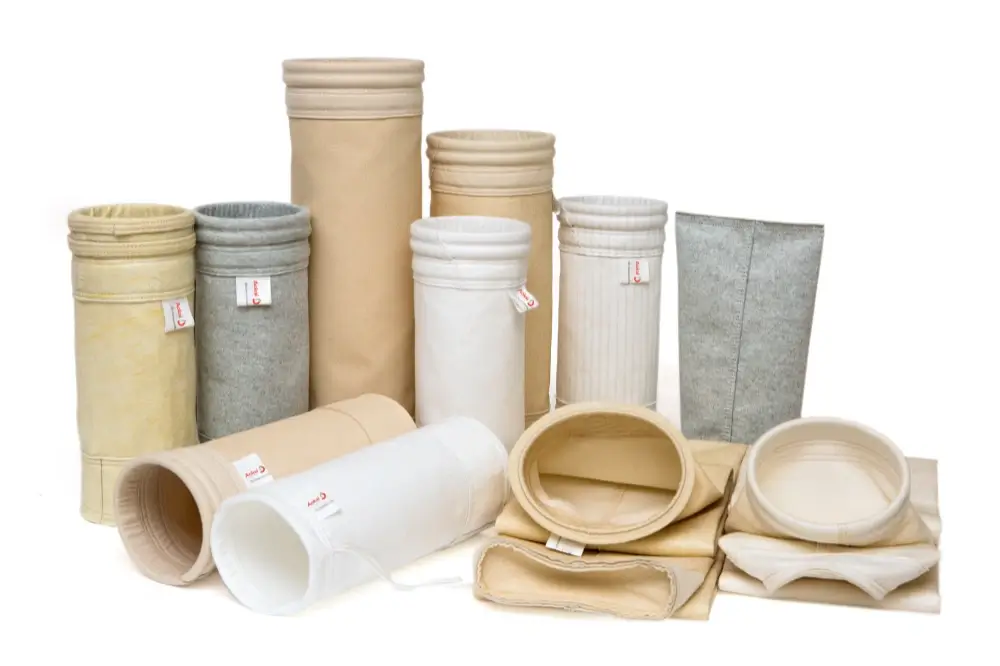
Aokai manufactures replacement filter bags according to existing drawings, samples or measured dimensions. We support pulse-jet, reverse-air and other industrial baghouse configurations.
Available options include:
- Snap band, flange, ring and cuff tops
- Disc, reinforced and wear-resistant bottoms
- Round, flat and special-shaped filter bags
- High-temperature sewing thread
- Double- and triple-needle seams
- Wear strips and cage contact protection
- ePTFE membrane lamination
- Water and oil repellent treatment
- Anti-static construction
- Custom filter media blends
YARDIM VE DESTEK
SSS
Steel plants use polyester, aramid, PPS, P84, fiberglass composite, FMS and PTFE filter bags. The correct material depends on the process area, baghouse inlet temperature, moisture, gas chemistry, dust abrasiveness and cleaning method.
EAF baghouses often require high-temperature media such as fiberglass composite, FMS, P84 or PTFE. The final choice depends on the temperature after gas cooling, spark control, fine fume loading and chemical conditions.
Yes. Aramid filter bags can be suitable for hot, dry and abrasive dust at continuous temperatures up to approximately 204°C. They require careful review when moisture, condensation or strong acid gas is present.
An ePTFE membrane can improve surface filtration and dust release. It is often considered where the baghouse handles fine metal oxide fume or requires stable low-emission performance. The membrane must be matched to the base media and cleaning system.
Hot particles and sparks can burn or damage filter media. Bag material alone cannot solve a serious spark problem. The dust collection system may also require spark arresting, gas cooling, correct duct design and stable process control.
Yes. Aokai can inspect an existing filter bag and reproduce its dimensions, top, bottom, seam and media structure. Operating data is still required to confirm whether the existing material remains suitable.
Bize Ulaşın
Tüm bilgiler gizli tutulacaktır.