


Sektör İçgörüleri
Baghouse Filter Bags Price: How Much Should You Budget in 2026?
Baghouse Filter Bags Price?
For 2026 budget planning, custom industrial baghouse filter bags generally fall within an indicative factory-direct range of US$8 to US$150 or more per bag. Standard polyester bags usually sit at the lower end. PPS, P84, PTFE, membrane-laminated, and large custom bags cost more. For a baghouse using 1,000 bags, the product-only budget may therefore range from about US$8,000 to more than US$150,000, before freight, duties, filter cages, installation, and shutdown costs.
The best way to control the budget is to compare bags by cost per operating month, not unit price alone. For example, a US$18 bag lasting 18 months costs US$1.00 per bag-month. A US$27 bag lasting 36 months costs US$0.75 per bag-month. In this example, the higher-priced option lowers the bag cost per operating month by 25% and reduces the number of planned shutdowns.
Estimated Baghouse Filter Bag Prices by Material
The following ranges are intended for early budget planning. They assume common industrial configurations and medium-volume, factory-direct orders. Very short bags, very long bags, special constructions, low quantities, branded fibers, and demanding documentation can change the price.
| Filter bag material | Indicative price per bag | Typical cost level | Common reason for choosing it |
|---|---|---|---|
| Polyester iğne keçe | US$8–25 | Low | Dry dust at low and moderate temperatures |
| Akrilik | US$12–30 | Low to medium | Moist or mildly acidic conditions at moderate temperatures |
| Aramid or Nomex-type felt | US$18–45 | Medium | Dry, higher-temperature dust collection |
| PPS | US$25–65 | Medium to high | Acidic, humid, or sulfur-containing gas |
| Fiberglass or composite media | US$20–60 | Medium | High-temperature applications |
| P84 | US$35–80 | Yüksek | Fine dust and high-temperature filtration |
| PTFE felt | US$60–150+ | Yüksek | Corrosive gas, moisture, and demanding operating conditions |
| PTFE membrane option | Added to base bag price | Varies | Surface filtration, easier dust release, and emission control |
These figures do not represent a fixed quotation. Bag diameter, length, media weight, construction, finish, quantity, packaging, and delivery terms must be confirmed before a supplier can give an accurate price.
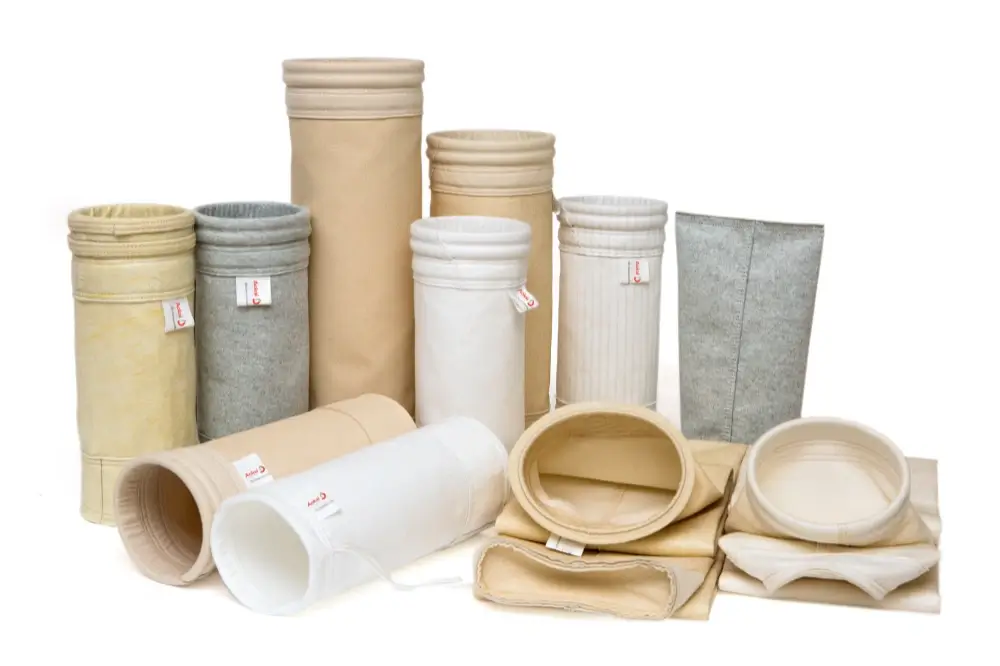
How to Calculate a Baghouse Filter Bag Replacement Budget
A useful replacement budget includes more than the price of the bags.
Use this basic formula:
Total replacement budget = bag price × quantity + packaging + freight + import costs + installation + shutdown cost
Suppose a plant needs 1,000 replacement bags and receives a product quotation of US$22 per bag:
| Budget item | Example calculation |
|---|---|
| Filter bags | 1,000 × US$22 |
| Product subtotal | US$22,000 |
| Export packaging | Quoted separately or included |
| Freight and insurance | Based on shipment size and destination |
| Import duty and local taxes | Based on destination country |
| Local delivery | Based on site location |
| Installation labor | Based on baghouse design and site conditions |
| Production shutdown | Calculated by the plant |
The US$22,000 product subtotal is only one part of the project. For plants in the United States or Europe, freight, customs clearance, local delivery, installation, and downtime can materially affect the final budget.
When comparing quotations, make sure every supplier uses the same Incoterm, quantity, construction, material, dimensions, and packing requirements.
What Determines the baghouse filter bag cost?
1. Filter media
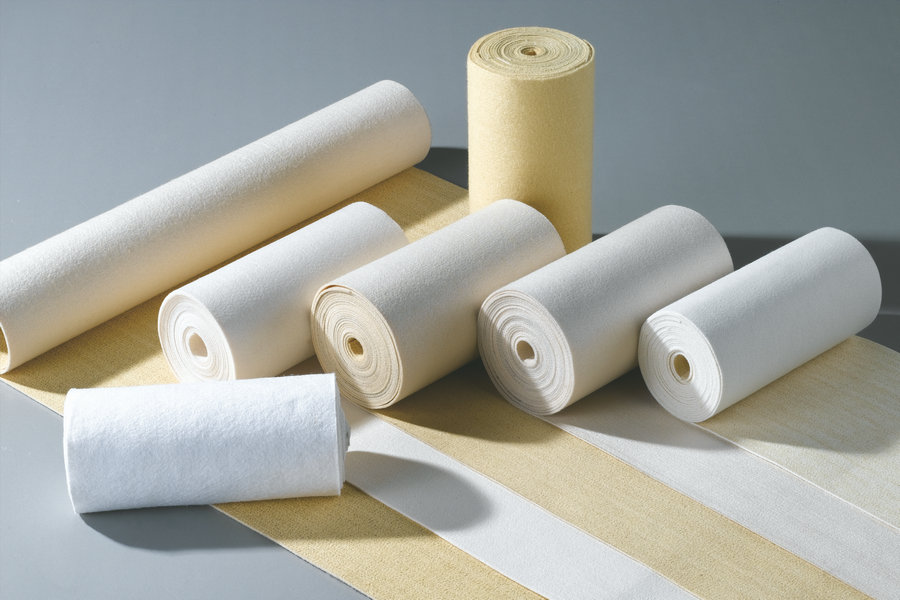
Filter media normally has the greatest effect on price. Polyester is widely used and usually has the lowest material cost. PPS, P84, PTFE, specialty fiberglass, and blended media require more expensive fibers and manufacturing processes.
However, the cheapest material is not always suitable. Temperature, moisture, oxygen, acid gases, alkalis, and dust properties can cause an incorrectly selected bag to shrink, harden, blind, corrode, or fail early.
If the material has not yet been confirmed, use a separate filter bag material comparison before requesting a final price.
2. Bag diameter and length
Longer and wider bags use more filter media. They also require more sewing, reinforcement, packaging space, and shipping volume.
A 160 mm × 6,000 mm bag should not be priced in the same way as a 130 mm × 2,000 mm bag, even if both use polyester needle felt.
Buyers should provide the finished diameter and length. The dimensions should refer to the filter bag itself, not only the cage or tube sheet opening.
3. Filter media weight and construction
Two bags described as “polyester” may have different weights, scrims, thicknesses, permeability, tensile strength, and surface treatments.
A low quotation may be based on lighter media or a simpler construction. Ask each supplier to state:
- Fiber composition
- Scrim material
- Nominal media weight
- Kalınlık
- Hava geçirgenliği
- Surface finish
- Recommended continuous temperature
- Recommended peak temperature
This information helps the purchasing team make a fair comparison.
4. Top and bottom design
A simple raw-edge bag normally costs less than a bag with a snap band, flange, metal ring, reinforced cuff, wear strip, grounding wire, or special bottom construction.
Small differences in the top design can also affect installation. An incorrect snap band size may cause poor sealing, dust leakage, or a dropped bag. Therefore, price should never be separated from fit.
For an existing collector, send a drawing, detailed photos, or an old bag sample. You can also review the replacement filter bag matching process.
5. Surface treatment
Common finishes include:
- Singeing
- Glazing or calendaring
- Heat setting
- Water- and oil-repellent treatment
- Anti-statik işlem
- Acid-resistant treatment
- PTFE impregnation
- ePTFE membrane lamination
Each treatment adds processing steps. Some treatments can improve dust release, control moisture-related blinding, or support lower emissions. Their value depends on the actual operating conditions.
6. Order quantity
A small trial order usually has a higher unit price. Setup, cutting, sewing, inspection, documents, and packaging must still be completed even when the order contains only a few bags.
Larger orders distribute these costs across more units. However, the lowest unit price should not be the only target. Batch consistency and delivery risk become more important as quantity increases.
7. Quality and documentation requirements
European and US customers may request material certificates, inspection records, dimensional reports, packing lists, origin documents, batch identification, or special labeling.
These requirements may increase the quotation slightly, but they also reduce receiving and installation risks. State all documentation requirements before the supplier prepares the final offer.
8. Delivery terms and lead time
An EXW price cannot be compared directly with an FOB, CIF, DAP, or delivered price.
Urgent production and air freight can also raise the project cost. If the replacement date is known, request pricing early enough to allow time for sample confirmation, production, inspection, and shipping.
Unit Price vs. Total Cost of Ownership
A low unit price may look attractive but create a higher annual cost if the bags fail early or cause unstable pressure drop.
A practical cost comparison should include:
Annualized bag cost = total delivered bag cost ÷ expected service life in years
A more complete calculation is:
Total operating cost = delivered bag cost + installation + energy use + maintenance + downtime + disposal
Consider the following simplified example:
| Option | Delivered price per bag | Expected life | Cost per bag-month |
|---|---|---|---|
| Option A | US$18 | 18 months | US$1.00 |
| Option B | US$27 | 36 months | US$0.75 |
Option B costs 50% more at the time of purchase. Its estimated bag cost per operating month is 25% lower. It may also avoid one replacement shutdown during the 36-month period.
This calculation only works when the expected service life is based on comparable operating conditions. Suppliers should not promise a fixed lifespan without reviewing temperature, gas chemistry, moisture, filtration velocity, cleaning pressure, and the previous failure mode.
How to Compare Two Filter Bag Quotations
Before choosing a quotation, place the following information side by side:
| Comparison point | What to verify |
|---|---|
| Malzeme | Fiber, scrim and blend ratio |
| Media specification | Weight, thickness and permeability |
| Dimensions | Finished diameter and length |
| Top design | Snap band, cuff, flange or ring |
| Bottom design | Disc, reinforced or special bottom |
| Finish | Membrane, anti-static or chemical treatment |
| Quantity | Total bags and spare bags |
| Quality control | Dimensional and visual inspection |
| Packaging | Carton, woven bag, pallet or custom packing |
| Delivery term | EXW, FOB, CIF, DAP or another Incoterm |
| Lead time | Production time and shipping time |
| Documentation | Certificates, inspection reports and labels |
If one quotation is much lower than the others, check the media weight, bag length, fiber composition, surface finish, top construction, packaging, and delivery term first.
What Information Is Needed for Baghouse Filter Bags Price?
To receive a usable quotation, provide as much of the following information as possible:
- Filter bag diameter and length
- Required quantity
- Current filter bag material
- Top and bottom construction
- Tube sheet hole size
- Filter cage dimensions
- Normal operating temperature
- Peak temperature and duration
- Dust type and particle characteristics
- Gas composition, moisture, and acid content
- Baghouse cleaning method
- Current filter bag problem
- Required emission level
- Delivery country and destination
- Drawing, nameplate, sample, or clear photos
If you do not have a technical drawing, an old bag sample or a complete set of photos can often be used to begin the matching process.
Should You Buy the Cheapest Baghouse Filter Bags?
Choose the lowest-priced option only when it matches the required material, dimensions, construction, temperature limit, and filtration performance.
For dry, moderate-temperature dust, a standard polyester bag may provide the best value. A more expensive PPS or PTFE bag would add little value if the operating conditions do not require it.
In acidic, humid, corrosive, or high-temperature gas, an unsuitable low-cost bag can fail early. The plant may then pay twice for replacement bags, labor, freight, and shutdown time.
The right goal is the lowest reliable cost over the planned operating period.
Frequently Asked Questions
How much do Baghouse Filter Bags Price?
For early 2026 budget planning, custom industrial bags may range from about US$8 to US$150 or more per bag. Polyester usually sits at the lower end. PPS, P84, PTFE, membranes, long dimensions, and special constructions increase the price. A supplier must review the complete specification before confirming the final baghouse filter bag cost.
Why do most suppliers not publish a fixed price?
Most industrial filter bags are made to match a specific baghouse. Material, diameter, length, media weight, top design, bottom design, finish, quantity, and delivery terms all affect the price. Publishing one fixed figure can be misleading because two bags with the same material name may have very different specifications.
Does a PTFE membrane increase the price?
Yes. Membrane lamination adds material and processing costs. It may still reduce total operating cost when it improves dust release, stabilizes differential pressure, supports lower emissions, or extends useful service life. The benefit depends on the dust, cleaning system, air-to-cloth ratio, and operating conditions.
Are filter cages included in the price?
Normally, a filter bag quotation includes bags only unless the offer states otherwise. Filter cages, venturis, accessories, freight, import costs, and installation should appear as separate items. Ask for an itemized quotation so that the total project budget is clear.
Is a sample order more expensive per bag?
Usually, yes. Pattern setup, cutting, sewing, inspection, documents, and packaging are required even for a small quantity. A sample order can still be useful because it allows the buyer to verify dimensions, construction, and fit before approving full production.
Should all filter bags be replaced at the same time?
A complete replacement is often more economical when most bags are the same age or near the end of their service life. Individual replacement may be suitable when damage is limited to a few positions. Check cages and operating conditions before installing new bags.
How can I get an accurate quotation?
Send the quantity, material, finished dimensions, top and bottom design, operating temperature, dust type, gas conditions, cleaning method, and delivery destination. Add a drawing, sample, or clear photos whenever possible. A complete inquiry reduces quotation revisions and specification errors.
Sonuç
A realistic baghouse filter bag budget should cover the product, freight, import costs, installation, and planned downtime. Unit prices may range from about US$8 to more than US$150, but material name alone cannot determine the final figure.
Compare quotations using the same dimensions, media specification, construction, quantity, packing, and delivery terms. Then calculate cost per operating month. This approach gives purchasing and maintenance teams a more useful answer than selecting the lowest unit price.
Need a project-specific price? Send your bag dimensions, material, quantity, operating conditions, and delivery country to request an itemized quotation.
