


Sektör İçgörüleri
How to Choose the Best Dust Filter Bags for the Metalworking Industry
The metalworking industry includes processes such as metal machining, smelting, welding and grinding, aluminum processing, and steel sintering. These production processes generate a large amount of metal dust—some particles are very fine (as small as 0.1 μm), and some are flammable, explosive, or corrosive. This dust not only pollutes the workshop environment and harms employee health but may also lead to environmental penalties if emissions exceed standards, and in some cases, even trigger safety accidents. Therefore, the importance of a dust collection system is self-evident.
As a core component of a metalworking dust collection system, the proper selection of dust filter bags directly determines the dust collector’s efficiency, equipment stability, and operational costs. In this article, based on decades of experience, Jiangsu AOKAI summarizes the selection and planning of dust filter bags for the metalworking industry!
Material Selection for the Best Dust Filter Bags in the Metalworking Industry: Match Precisely to Working Conditions
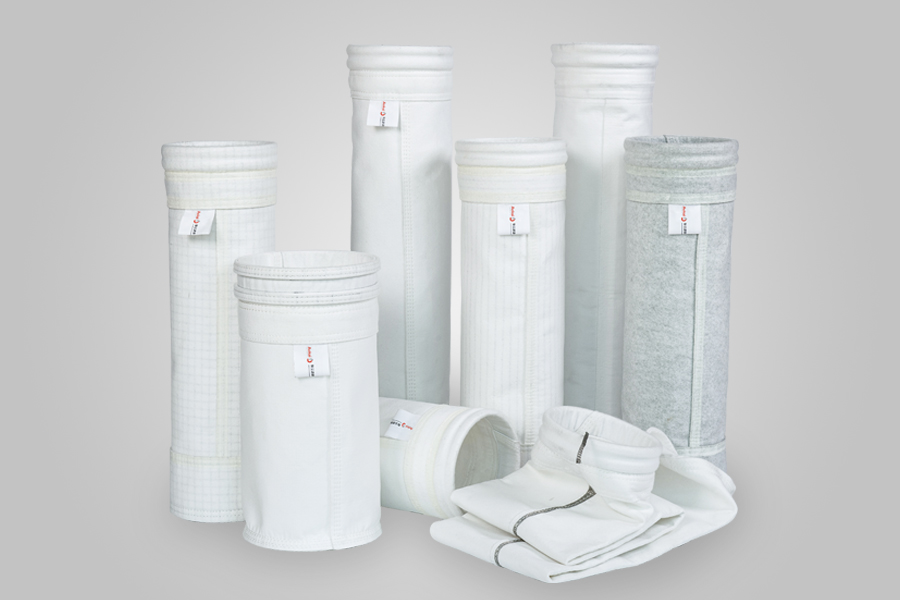
The material of a dust filter bag directly affects its temperature resistance, corrosion resistance, filtration precision, and service life. In the metalworking industry, the most commonly used filter bag materials are polyester, fiberglass, and PTFE. Different materials suit different working conditions. There is no need to blindly pursue high-end options—precise matching is the optimal choice. Below is a detailed comparison and selection recommendation:
1. Polyester İğne Keçe (with Membrane) – Normal Temperature
Polyester needle felt is cost-effective and widely used in normal-temperature metalworking, handling grinding, cutting, and small welding dust. It withstands up to 130℃, resists weak acids/bases, and filters 98%-99% of dust (membrane type 99.9%). Best for non-corrosive, non-explosive dust with moderate lifespan.
2. Fiberglass Needle Felt (with Membrane) – High Temperature & Mild Corrosion
Fiberglass needle felt suits high-temperature dust (180-260℃) with mild acids/bases. Membrane type captures 0.1μm fine dust with 99.9% efficiency. Ideal for smelting, forging, and heat treatment; main drawbacks are lower toughness and higher cost.

3. PTFE Filter Bags (Fabric + Membrane) – Severe Conditions
PTFE filter bags excel in harsh conditions, handling high-temperature, corrosive, and explosive dust. They resist 200-260℃, strong acids/bases, and filter <0.1μm dust at 99.99%. Suitable for aluminum processing, electroplating, and flammable metal dust, with the longest lifespan but higher cost.
