


Dust collector filter bags are the core components of a baghouse dust collection system. They are used to capture dust particles, reduce emissions, protect production equipment, and keep the whole system running efficiently.
However, in real industrial applications, filter bags may break, tear, develop holes, become blinded, or fail earlier than expected.
Once dust collector filter bag failure occurs, the dust collector may experience visible dust emissions, abnormal differential pressure, frequent pulse cleaning, higher energy consumption, and unstable production. In serious cases, damaged filter bags may even affect the normal operation of the entire production line.
So, why do dust collector filter bags break or tear?
The common causes include mechanical abrasion, high operating temperature, chemical corrosion, condensation, filter bag blinding, improper installation, damaged filter bag cages, abnormal pulse cleaning pressure, and incorrect filter media selection.
1. Mechanical Abrasion
Mechanical abrasion is one of the most common causes of dust collector filter bag failure. During operation, dust particles may continuously impact the filter bag surface. At the same time, filter bags may rub against the cage or against nearby bags.
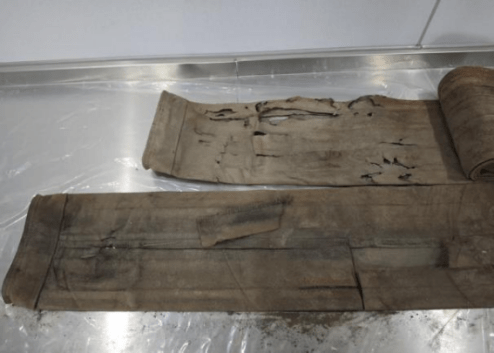
Over time, this friction can make the filter media thinner, weaker, and easier to tear.
Common causes of mechanical abrasion include:
- Hard or abrasive dust particles;
- Excessive filtration velocity;
- Uneven air flow distribution;
- Deformed, rusty, or rough filter bag cages;
- Insufficient spacing between filter bags.
If the bottom of the filter bag is seriously worn, the problem is often related to dust-laden air impact. If vertical wear marks appear on the bag surface, the filter bag cage should be carefully checked.
2. High Operating Temperature
Different filter bag materials have different temperature resistance levels. If the actual operating temperature exceeds the material’s limit, the filter bag may shrink, harden, become brittle, lose strength, or tear.

For example, polyester filter bags are more suitable for normal-temperature working conditions. PPS, aramid, P84, fiberglass, and PTFE filter bags are more commonly used in medium-temperature, high-temperature, or harsh industrial applications.
At Aokai, we usually define working conditions above 160°C as high-temperature filter bag applications.
To prevent temperature-related filter bag failure, it is important to:
- Confirm the continuous operating temperature;
- Check the peak temperature;
- Avoid short-term temperature spikes;
- Choose filter media with enough temperature safety margin.
Selecting filter bags only based on average temperature is risky. Peak temperature and temperature fluctuation should also be considered.
3. Chemical Corrosion
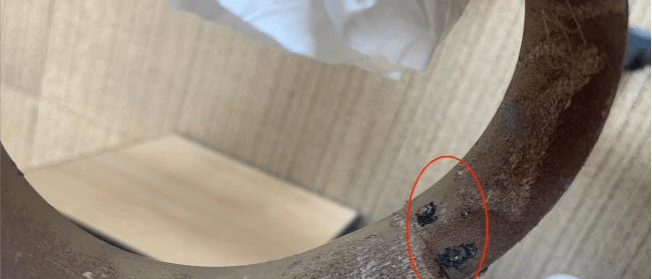
Many industrial flue gases contain acidic gases, alkaline substances, moisture, oxidizing gases, or oil mist. These components can gradually attack the filter fibers and reduce the strength of the filter media.
After chemical corrosion, filter bags may become discolored, brittle, weak, or show small holes. The sewing thread may also become weaker. Once the filter bag loses strength, it is more likely to break during pulse cleaning or normal operation.
Chemical corrosion is common in industries such as waste incineration, chemical plants, cement kilns, coal-fired boilers, and biomass boilers.
In these applications, filter bag selection should not only consider temperature. Gas composition and chemical resistance are also very important.
4. Moisture, Condensation, and Filter Bag Blinding
When the temperature inside the dust collector falls below the dew point, moisture may condense on the surface of the filter bags. Once dust mixes with moisture, it can become sticky and attach to the filter bag surface.
This can cause filter bag blinding, poor dust release, and cleaning difficulty.
Filter bag blinding often leads to high differential pressure. When filter bags operate under high resistance for a long time, they may deform, crack at the seams, or tear in some areas.
To reduce moisture-related filter bag failure, plants should:
- Avoid operating below the dew point;
- Reduce cold air leakage;
- Keep compressed air dry and clean;
- Use water and oil repellent filter media or membrane filter bags for humid or sticky dust conditions.
5. Improper Installation

Improper installation can also cause early filter bag failure. If the filter bag size is incorrect, the bag mouth is not sealed properly, the bag is twisted, the cage is forced into the bag, or the tube sheet has sharp edges, the filter bag may be scratched or placed under uneven stress.
Before installation, it is important to confirm:
- Filter bag diameter;
- Filter bag length;
- Bag top design;
- Cage size;
- Tube sheet hole size.
After installation, the bag mouth should be fully sealed, and the cage should be inserted smoothly without damaging the filter bag.
Correct installation can greatly reduce premature filter bag damage.
6. Filter Bag Cage Problems
The filter bag cage supports the filter bag during operation. If the cage is rusty, bent, broken, poorly welded, or has sharp burrs, it may continuously rub the filter bag from the inside.
When filter bags expand and contract during pulse cleaning, cage defects can cause repeated friction and eventually lead to holes or tearing.
Common cage problems include:
- Rusty cage wires;
- Bent or deformed cages;
- Rough welding points;
- Sharp burrs;
- Incorrect cage size.
When replacing filter bags, it is not recommended to ignore the condition of the cages. If old cages are already damaged, new filter bags may fail again very quickly.
7. Abnormal Pulse Cleaning Pressure
Pulse cleaning is necessary for dust collector operation, but the cleaning pressure must be properly controlled.
If the pulse cleaning pressure is too high, the filter bag will receive strong impact during each cleaning cycle. Over time, this can cause filter media fatigue, seam damage, or bag mouth deformation.
However, if the cleaning pressure is too low, dust cannot be removed effectively. This can increase differential pressure and add extra load to the filter bags.
Therefore, the pulse cleaning system should be adjusted according to actual working conditions. The goal is to maintain effective cleaning while avoiding unnecessary damage to the filter bags.
8. Incorrect Filter Media Selection
In many cases, dust collector filter bag failure is not only a product quality issue. It is often caused by incorrect filter media selection.
When selecting filter bags, the following factors should be considered:
- Operating temperature;
- Peak temperature;
- Dust abrasiveness;
- Moisture content;
- Acid and alkali content;
- Oxygen content;
- Oil mist or sticky dust;
- Emission requirements;
- Cleaning method.
For example, polyester filter bags are not suitable for high-temperature or highly corrosive conditions. Aramid filter bags have good temperature resistance, but they should be carefully evaluated in humid and acidic environments. PPS, PTFE, P84, and fiberglass filter bags should also be selected according to specific gas conditions.
The right filter media can significantly reduce filter bag damage and extend service life.
How to Identify the Cause of Filter Bag Failure
The damage position can help identify the possible cause of filter bag failure.
- Bottom wear: may be caused by dust impact or abrasive dust;
- Vertical wear marks: may be caused by rusty, deformed, or rough cages;
- Bag mouth damage: may be caused by improper installation or poor sealing;
- Small round holes or burn marks: may be caused by sparks or hot particles;
- Brittle filter media: may be caused by high-temperature aging or chemical corrosion;
- Sticky bag surface: may be caused by condensation, oil mist, or filter bag blinding.
Finding the real cause before replacing filter bags can help prevent the same problem from happening again.
Conclusion
Dust collector filter bags may break or tear due to mechanical abrasion, high temperature, chemical corrosion, condensation, filter bag blinding, improper installation, damaged cages, abnormal pulse cleaning pressure, or incorrect filter media selection.
In real applications, dust collector filter bag failure is often caused by several factors at the same time. Therefore, plants should not only focus on the filter bags themselves. They should also analyze the dust collector structure, operating temperature, gas composition, dust characteristics, cage condition, and pulse cleaning system.
As a professional dust collector filter bag manufacturer, Aokai has rich experience in filter bag production and application. We usually help customers analyze filter bag failure based on operating temperature, dust type, gas composition, filter bag size, cage condition, and actual service life.
If your filter bags break, tear, or fail earlier than expected, contact Aokai. We can help you identify the possible cause and recommend a more suitable filtration solution.
FAQ
1. Why do dust collector filter bags fail?
Dust collector filter bag failure is commonly caused by mechanical abrasion, high temperature, chemical corrosion, condensation, improper installation, cage problems, abnormal pulse cleaning, or incorrect filter media selection.
2. Why do filter bags have holes at the bottom?
Bottom holes are often related to dust-laden air impact, abrasive dust, ash accumulation in the hopper, or friction between filter bags.
3. Can filter bag cages damage filter bags?
Yes. Rusty, deformed, rough, or incorrectly sized cages can rub against the filter bags from the inside and cause holes, wear marks, or tearing.
4. Can high temperature cause filter bags to tear?
Yes. Excessive temperature can cause filter bags to shrink, harden, become brittle, lose strength, and eventually crack or tear.
5. How can we reduce dust collector filter bag failure?
To reduce filter bag failure, choose the correct filter media, check cage quality, install filter bags properly, control pulse cleaning pressure, avoid condensation and overheating, and analyze damaged bags regularly.
