


Selecting a filter bag material is not simply a matter of choosing the media with the highest temperature rating. The correct material must withstand the actual combination of temperature, moisture, oxygen, chemicals, dust abrasiveness, cleaning energy and emission requirements inside the baghouse.
This filter bag material comparison explains the practical differences between polyester, acrylic, aramid, PPS, P84, fiberglass and PTFE filter bags. Use it as an initial selection guide, then confirm the final media and bag construction against your complete operating conditions.
Filter Bag Material Comparison Chart
| Filter Bag Material | Typical Continuous Temperature | Short-Term Peak Temperature | Main Advantage | Main Limitation | Tipik Uygulamalar |
|---|---|---|---|---|---|
| Polyester | Up to 130°C / 266°F | About 150°C / 302°F | Cost-effective with good mechanical strength | Vulnerable to hydrolysis under heat and moisture | Cement grinding, woodworking, minerals, food powder |
| Akrilik | Up to 130°C / 266°F | About 150°C / 302°F | Better hydrolysis resistance than polyester | Not designed for high-temperature operation | Dryers, chemical processing, humid dust collection |
| PPS | Up to 190°C / 374°F | About 200°C / 392°F | Strong acid, alkali and hydrolysis resistance | Can oxidize under high oxygen and elevated temperature | Coal boilers, biomass boilers, power generation |
| Aramid / Meta-Aramid | Up to 204°C / 399°F | Up to 240–250°C* | Good heat and abrasion resistance | Limited in humid, acidic gas conditions | Asphalt, cement, steel and mineral processing |
| P84 | Up to 240°C / 464°F | About 260°C / 500°F | Fine-dust capture and good dust-release performance | Requires review under high moisture or strong alkali exposure | Cement kilns, mineral processing, fine high-temperature dust |
| Fiberglas | 180–260°C / 356–500°F* | Up to 280°C* | High heat resistance and dimensional stability | Lower flex resistance; sensitive to improper cage or cleaning conditions | Cement, steel, power generation and high-temperature baghouses |
| PTFE | Up to 240°C / 464°F | About 260°C / 500°F | Excellent chemical, moisture and heat resistance | Higher initial cost | Waste incineration, chemical plants, corrosive flue gas |
*Actual temperature capability depends on fiber grade, filter media construction, surface treatment and operating conditions.
Why Filter Bag Material Comparison Cannot Be Based on Temperature Alone
Temperature is important, but it is only one part of filter media selection. A material may withstand the normal temperature and still fail because of condensation, acid gas, oxidation or mechanical wear.
A complete filter bag material comparison should consider:
- Continuous operating temperature
- Maximum temperature and temperature fluctuations
- Gas moisture and dew point
- Acid and alkaline components
- Oxygen concentration
- Dust particle size
- Dust abrasiveness and stickiness
- Hava-bez oranı
- Cleaning pressure and frequency
- Required outlet emission
- Existing filter bag failure symptoms
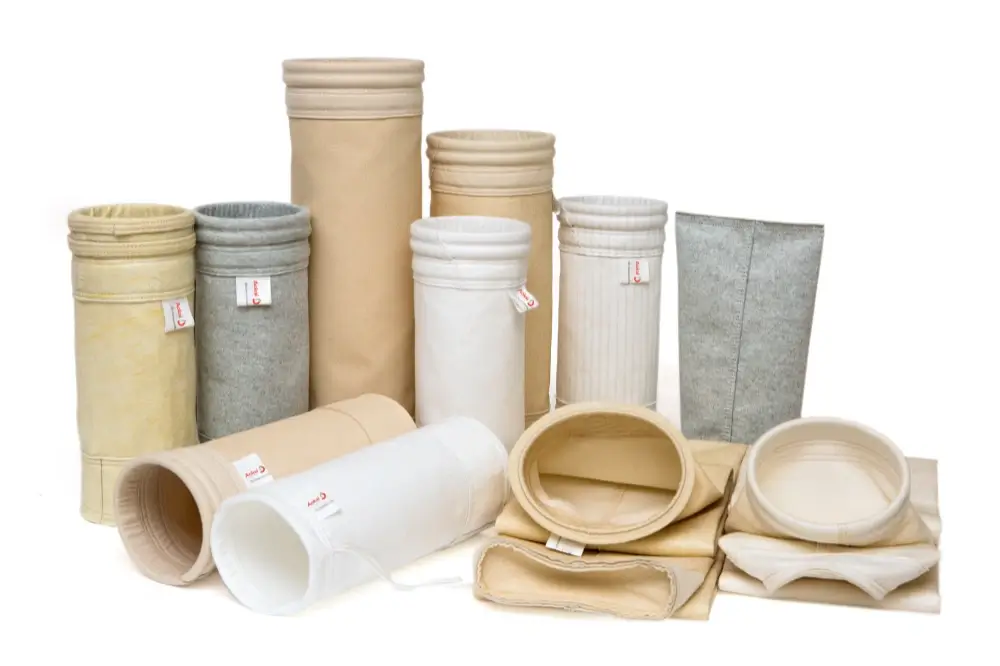
Filter Bag Materials

Aramid filter bags, including meta-aramid and Nomex-type media, provide good performance in dry high-temperature dust collection. They also offer good abrasion resistance for heavy industrial dust.
Aramid is widely used in asphalt mixing, cement, steel and mineral processing. Hot moisture, acid gas and condensation can accelerate hydrolytic or chemical damage, so the complete gas condition must be reviewed.
Best for: Dry heat, abrasive dust and frequent pulse cleaning
Avoid when: Hot moisture, condensation and acidic gas occur together

PTFE filter bags provide the strongest overall resistance to heat, moisture and many chemical environments. They are commonly selected for waste incineration, chemical processing and difficult corrosive gas conditions.
A full PTFE needle felt bag has a higher initial cost. However, it may provide a lower total operating cost when less-resistant media would require frequent replacement.
Best for: Corrosive gas, high humidity, high heat and difficult dust
Avoid when: Operating conditions do not justify the higher material cost
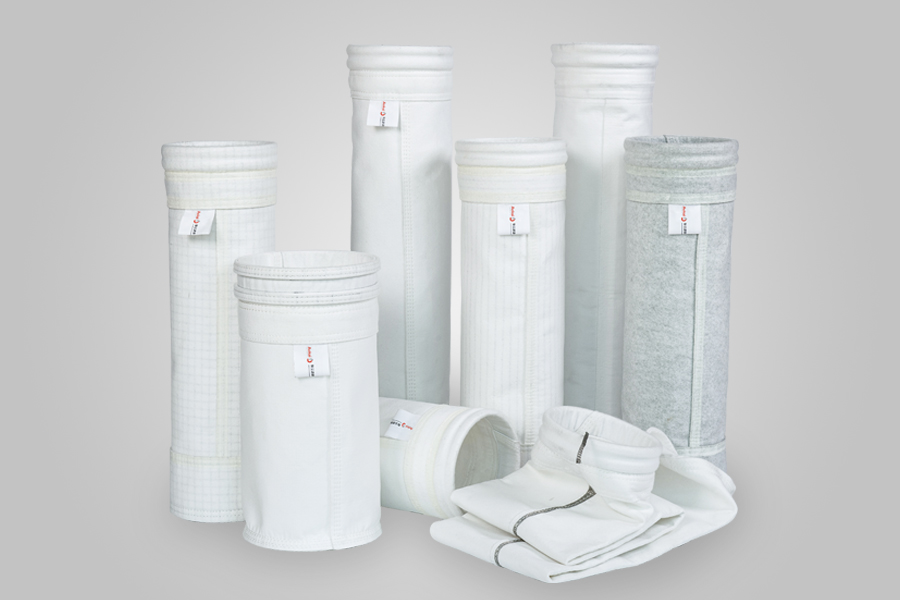
Polyester filter bags are widely used for dry dust collection below approximately 130°C. They offer good tensile strength, dimensional stability and abrasion resistance at a competitive cost.
Polyester is suitable for cement grinding, woodworking, grain handling, mineral processing and general industrial dust. It should not be the first choice when hot moisture, steam or condensation creates a hydrolysis risk.
Best for: Dry, low-temperature and cost-sensitive applications
Avoid when: Hot moisture, steam, strong alkali or severe condensation is present

Acrylic filter bags provide better hydrolysis resistance than standard polyester. They are often considered for humid gas, mildly acidic conditions and processes with moderate moisture exposure.
Acrylic remains a low-to-medium-temperature material. It should not be selected only because moisture is present if the continuous temperature exceeds its operating range.
Best for: Humid, low-temperature and mildly acidic gas streams
Avoid when: The process has continuous high heat or severe chemical exposure
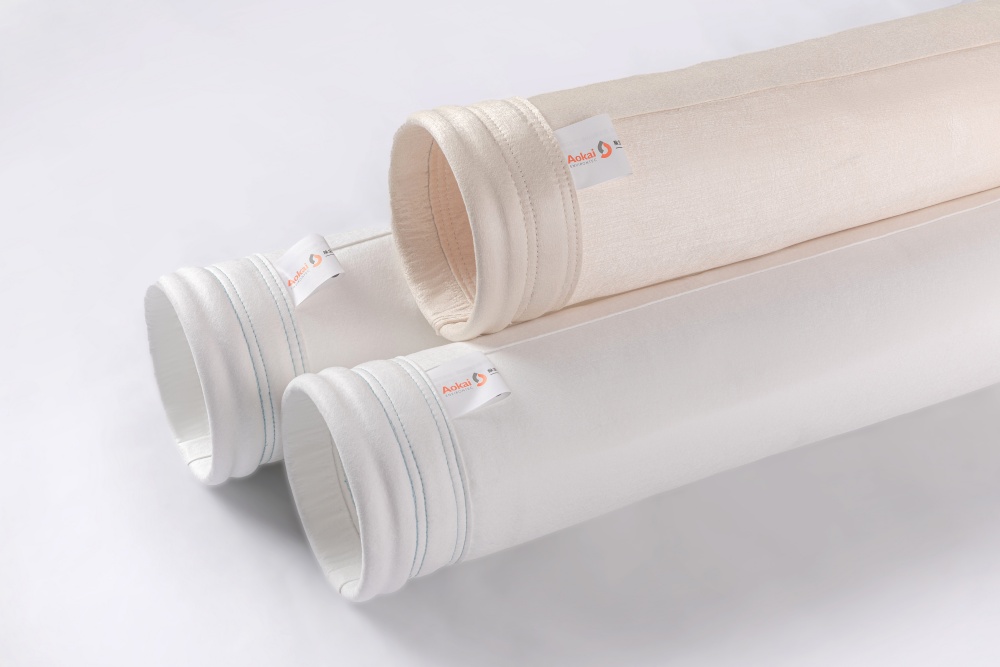
PPS filter bags combine heat resistance with strong resistance to acids, alkalis and hydrolysis. They are commonly evaluated for coal-fired boilers, biomass boilers and sulfur-containing flue gas.
However, PPS can oxidize when high oxygen and elevated temperature occur together. Oxygen concentration, temperature peaks and startup conditions must be checked before final selection.
Best for: Sulfur-containing, acidic and moisture-prone flue gas
Avoid when: High oxygen and high temperature create oxidation risk

P84 filter bags use polyimide fibers with a multilobal fiber shape. This structure provides a larger filtration surface and can support fine-particle capture and effective dust-cake release.
P84 is often used for high-temperature fine dust in cement, mineral and industrial furnace applications. Moisture, alkaline components and temperature fluctuations should still be checked.
Best for: High-temperature fine dust and stable filtration performance
Avoid when: Severe moisture or incompatible alkaline chemistry is present
Filter Bag Selection by Operating Condition
| Operating Condition | Recommended Starting Point | Important Checks |
|---|---|---|
| Dry dust below 130°C | Polyester | Abrasion, static risk and dust release |
| Humid gas below 130°C | Akrilik | Acid concentration and condensation |
| Sulfur-containing flue gas | PPS | Oxygen level and peak temperature |
| Dry, hot and abrasive dust | Aramid | Moisture and acid gas |
| Fine dust at high temperature | P84 | Moisture and alkaline components |
| Stable very-high-temperature gas | Fiberglas | Cleaning method and cage condition |
| Corrosive, humid and complex flue gas | PTFE | Process temperature and total cost |
| Mixed or changing conditions | Blended filter media | Fiber ratio, scrim and surface treatment |
For a deeper comparison of high-temperature materials, see:PTFE vs PPS vs Aramid vs P84 Filter Bags
Filter Material vs Surface Treatment
| Surface Treatment | Main Function | Recommended Conditions |
|---|---|---|
| Singeing | Removes loose surface fibers | General industrial dust |
| Kalenderleme | Creates a smoother and denser surface | Fine dust and easier cleaning |
| Isı Ayarı | Improves dimensional stability | Elevated-temperature operation |
| Water and Oil Repellent | Reduces moisture and oil penetration | Humid, oily or sticky dust |
| Anti-Statik İşlem | Dissipates static charge | Combustible or explosive dust |
| PTFE Emprenye | Improves surface release and chemical protection | Corrosive or difficult dust |
| ePTFE Membran | Supports surface filtration and fine-dust capture | Low emissions and difficult dust release |
YARDIM VE DESTEK
Filter Bag Material Comparison FAQ
A filter bag material comparison helps engineers compare temperature limits, chemical resistance, moisture resistance, mechanical properties and operating costs before selecting baghouse filter media.
Polyester is one of the most common materials for dry dust collection below approximately 130°C. It is cost-effective but should not be used in hot, humid conditions with a high hydrolysis risk.
PTFE, P84, fiberglass, aramid and PPS can all be used at elevated temperatures. The correct material depends on temperature, moisture, oxygen, gas chemistry and dust properties.
PPS and PTFE are often considered for acidic flue gas. PPS requires proper oxygen and temperature control. PTFE is commonly considered for more chemically demanding conditions.
No. A PTFE membrane improves surface filtration and dust release, but it does not replace correct base-fiber selection. The base material must still match the operating temperature.
Provide the continuous temperature, peak temperature, gas composition, moisture, oxygen, dust properties, cleaning method and current filter bag problems. These factors should be reviewed together.
Bize Ulaşın
Tüm bilgiler gizli tutulacaktır.