


Industry Insights
How to Choose the Right Membrane Filter Bags for Waste-to-Energy Plants?
echnical Advantages of Membrane Filter Bags in 105,000m³/h Projects
In waste-to-energy (WtE) projects, the flue gas composition is extremely complex—high temperature, high humidity, and containing strongly corrosive gases. This places rigorous demands on the core component of the terminal dust removal system: the dust collector filter bag. Recently, we conducted an in-depth investigation into a waste incineration technical upgrade project. By analyzing the operating parameters and common pain points of its CDM512-6 dust collector, we reveal why membrane filter bags are the key to enhancing plant operational stability.
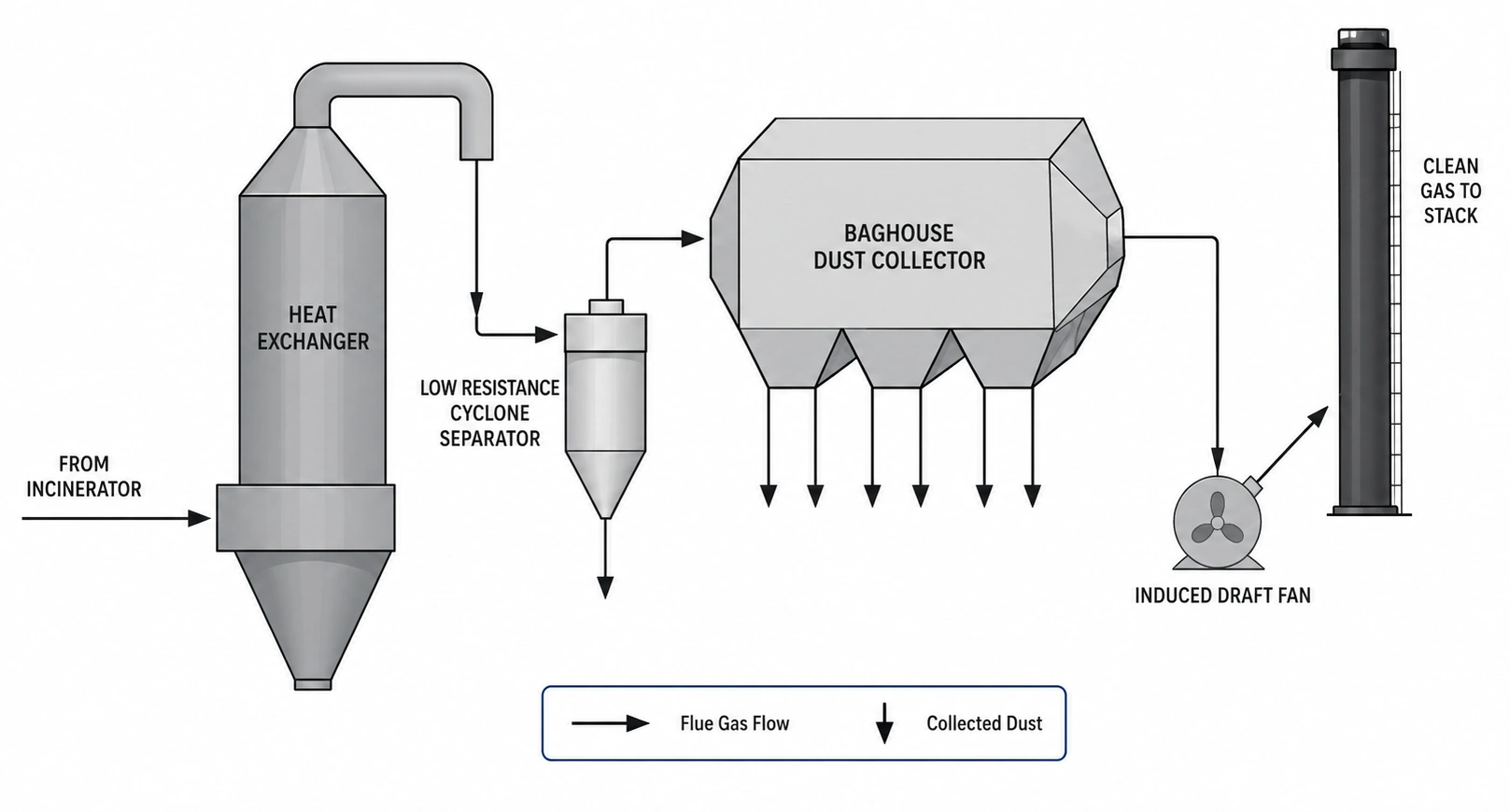
I. Project Background and Process Flow
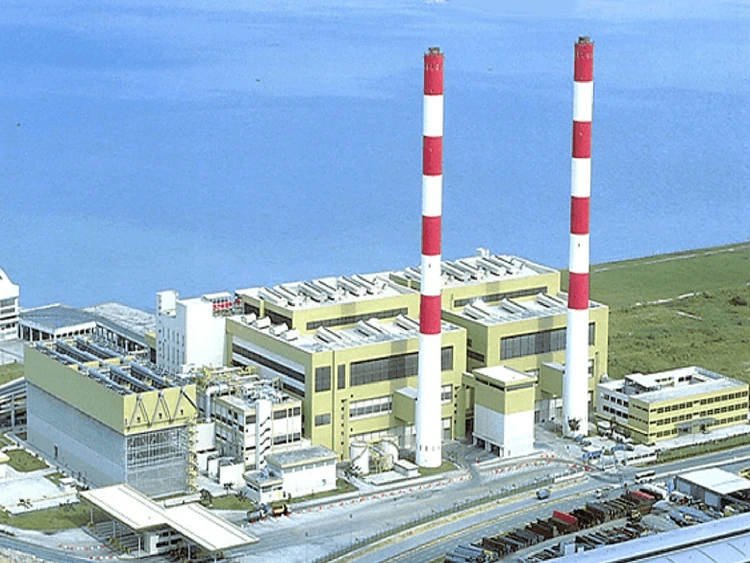
This project utilizes a typical combination of a circulating fluidized bed (CFB) tower for desulfurization, a low-resistance separator for removing coarse particles, and a baghouse dust collector. The flue gas from the incinerator undergoes desulfurization before entering the baghouse for final purification.
Core Operational Parameters:
- Flue Gas Flow Rate: 105,000 m³/h
- Inlet Dust Concentration: 1,000 g/Nm³ (High-load challenge)
- Flue Gas Temperature: 135 °C
- Allowable Resistance: 2,000 Pa
- Filtration Velocity: 0.57 – 0.68 m/min
In this case, the dust collector consists of 6 chambers with a total filtration area of 3,072 m². In such a high-concentration dust environment, the material choice for the dust collector filter bags directly determines the system’s emission levels and operating costs.
II. Typical Operational Pain Points: Why are your filter bags failing?
According to site records, the project faced several persistent issues before the technical upgrade, which are common across many power plants:
- High Operating Resistance: Resistance remained above 3,000 Pa for long periods, severely impacting boiler load.
- Extremely Short Service Life: Some dust collector filter bags failed within a week, with the longest lasting only three months, primarily failing at the bag mouth.
- Casing Deformation and Corrosion: Severe internal corrosion led to perforations in the blowpipes, and casing buckling caused physical damage by contacting the filter bags.
The root cause of these issues often lies in a mismatch between the filter media selection and the complex working conditions, as well as improper control of the cleaning system pressure.
III. Technical Upgrade: Advantages of Fiberglass + PTFE Membrane Filter Bags
For the specific conditions of waste incineration, the project ultimately selected fiberglass + PTFE membrane filter bags. These high-performance membrane filter bags have become the industry standard due to three major technical characteristics:

1. Surface Filtration Technology
Traditional deep-bed filtration media allow dust to embed within the fibers, making cleaning difficult and causing resistance to climb continuously. Membrane filter bags, however, feature a micro-porous Polytetrafluoroethylene (PTFE) film laminated to the base fabric, achieving true “surface filtration.” Dust is intercepted on the outside of the membrane and can be shed with a gentle pulse-jet, effectively solving the issue of excessive operating resistance.
2. Superior Chemical Stability
Waste incineration flue gas contains acidic gases; PTFE material offers exceptional corrosion resistance. Combined with a “clean-side” chamber design, it effectively prevents acid dew point corrosion, significantly extending the service life of the dust collector filter bags.
3. Low-Pressure Cleaning to Protect Media
Project findings indicate that the compressed air pressure for cleaning should be controlled around 0.3 MPa. By using membrane filter bags, their excellent dust-shedding properties eliminate the need for ultra-high-pressure pulses, thereby avoiding damage to the fiberglass substrate’s flex resistance caused by frequent high-pressure impacts.
IV. Expert Summary: 6 Key Points for Stable Dust System Operation
Based on the lessons learned and successes of this project, we recommend paying close attention to the following details when replacing or purchasing dust collector filter bags:
- Compatibility: The tolerance fit between the filter bag, cage, and tubesheet hole must be strictly controlled to prevent leakage at the bag mouth or physical wear.
- Dry Storage: Dust collector filter bags and cages should be brought to the site only at the final stage of installation and stored in a dry location to prevent moisture damage.
- Precision Installation: The quality of on-site installation significantly impacts bag life; professional teams must verify the verticality of the tubesheet.
Conclusion
In today’s pursuit of ultra-low emissions and operational efficiency, choosing high-quality dust collector filter bags and membrane filter bags is not just a guarantee for environmental compliance—it is a core strategy for reducing downtime and energy consumption.
If you are facing issues such as high resistance or frequent bag failure, contact our technical experts for a customized dust removal solution tailored to your waste incineration conditions.
