


Industry Insights
Filter Bag Blinding: Causes, Diagnosis and Solutions
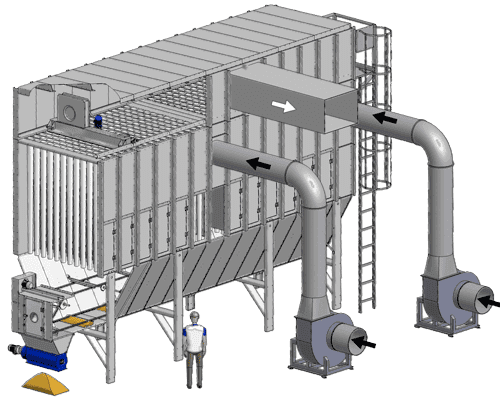
Filter bag blinding is one of the most common reasons for increased differential pressure in a baghouse dust collector.
Simply put, it occurs when dust sticks to the surface of the filter bag or becomes embedded inside the filter media and cannot be removed. Normal pulse cleaning can no longer effectively remove the dust layer, leading to reduced airflow, increased pressure drop, higher compressed air consumption, and significantly shortened filter bag life.
In many cases, the first reaction after blinding occurs is to replace the filter bags. However, if the root cause is not identified, the new bags will quickly become blinded again.
What Is Filter Bag Blinding?
Under normal conditions, the dust layer on the surface of the filter bag can be removed by pulse cleaning.

Blinding is different. The dust becomes moist, sticky, forms hard crusts, or penetrates deep into the filter media, making it impossible to clean the bag surface effectively.
Common Causes of Filter Bag Blinding
1. Condensation or Moisture Entering the Dust Collector
Condensation is one of the most common causes of filter bag blinding.
When the temperature inside the dust collector drops below the dew point, water vapor condenses into liquid. Dust then sticks to the filter bags and becomes difficult to remove by pulse cleaning. If removed filter bags appear wet or have mud-like deposits, condensation should be checked first. In this case, we recommend using water and oil repellent filter bags.
2. Oily or Sticky Dust
Some types of dust are naturally difficult to clean.
Examples include oily dust, resin dust, tar, asphalt, adhesives, plastic powder, or unburned organic particles. These materials can adhere to the filter bag surface. In such cases, we recommend using PTFE membrane filter bags.
3. Excessive Filtration Velocity
If too much air passes through the filter bags while the filtration area is insufficient, dust accumulation will exceed the cleaning capacity of the bags.
4. Incorrect Filter Media Selection
Some filter bags may meet temperature requirements but are not suitable for the specific dust characteristics.
For example, fine or sticky dust can easily penetrate standard needle felt and become difficult to remove over time. In certain applications, membrane filter bags or properly treated filter media can improve cleaning performance and reduce the risk of blinding. You can refer to Aokai’s filter bag selection recommendations for more details.
How to Identify Filter Bag Blinding
Before replacing filter bags, it is recommended to perform the following checks.
Check Differential Pressure Changes
Focus on the pressure drop before and after pulse cleaning.
If the pressure remains high after cleaning or rises quickly again, it indicates that the dust layer may no longer be releasing properly.
Inspect Several Filter Bags
Do not check only one bag. Remove and inspect several bags from different locations.
Look for:
- Wet or mud-like dust deposits
- Sticky surfaces
- Hard crust formation
- Oil contamination
- Uneven dust distribution
- Dust embedded deep inside the filter media
The condition of the filter bag surface can help identify the root cause.
Check Where the Problem Occurs
The location of blinding is important:
- Severe near the top: Possible moisture in compressed air or poor pulse cleaning
- Severe near the bottom: Possible hopper dust buildup or dust re-entrainment
- Only one row affected: Possible issues with pulse valves, blow pipes, or venturis
- All bags affected: Possible condensation, excessive airflow, or incorrect media selection
FAQ
Can blinded filter bags be cleaned and reused?
It depends on the situation. Light surface dust may be removable, but bags with hardened deposits, oil contamination, or severe moisture damage are usually difficult to fully restore.
Can PTFE membrane filter bags completely prevent blinding?
No. Membrane bags can improve dust release, but they cannot replace proper control of condensation, oil contamination, or process conditions.
Why is the differential pressure still high after pulse cleaning?
Possible reasons include already blinded filter bags, insufficient compressed air pressure, malfunctioning pulse valves, blocked blow holes, excessive airflow, or highly sticky dust.
